We partnered with this Proxy project, a proxy service platform offering residential, datacenter, and SOCKS5 IPs across dozens of countries, from the very start of the site's launch. That early involvement is what makes this case study different from a typical recovery project: instead of inheriting years of technical debt, we had the chance to set the foundation correctly and keep it clean as the site scaled.
The work happened in two clear phases. First, a full technical audit of the freshly launched site surfaced nearly 20 distinct technical SEO issue types, from broken pages and orphan URLs to missing meta tags and hreflang problems. We resolved every one of them. Second, we turned everything we learned during that cleanup into a repeatable publishing checklist, then used it to ship 100 new proxy pages without introducing a single new SEO error.
Here's exactly what we found, how we fixed it, the checklist we built, and how that system let us publish at scale while holding the error count at zero.
Results at a Glance
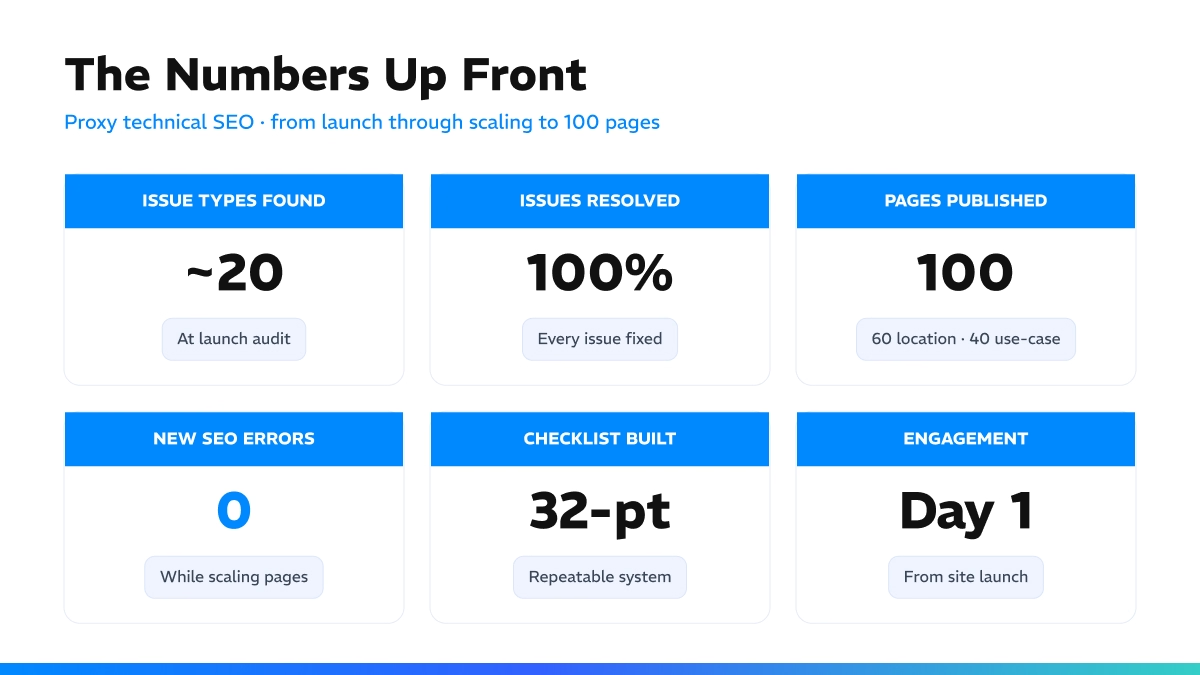
| Metric | Outcome |
|---|---|
| Technical Issue Types Found at Launch | Nearly 20 distinct issue types |
| Issues Resolved | 100%, all fixed |
| New Pages Published Through the Checklist | 100 (60 location pages + 40 use-case pages) |
| New SEO Errors Introduced While Scaling | 0 |
| Repeatable System Delivered | 32-point publishing checklist |
About the Project
Project: Proxy service platform
Industry: Proxy Services (Residential, Datacenter, SOCKS5)
Engagement Start: From site launch (full lifecycle)
Site Sections: location proxy pages, use-case proxy pages, scraper pages
Tools Used: Ahrefs Site Audit, Google Search Console, ScreamingFrog
The Challenge: A Clean Launch Still Needs a Clean Audit
A new site launch does not mean a zero-error site. Even with fresh pages, the first full crawl of the Proxy project surfaced nearly 20 distinct technical SEO issue types spread across the proxy location pages, use-case pages, scraper pages, and blog content. Left unchecked, these would have compounded fast as the site grew toward hundreds of pages.
The bigger challenge was not just fixing them once. It was making sure they never came back. The project had an aggressive publishing roadmap: dozens of country proxy pages and platform use-case pages still to ship. Without a system, every new page would be a fresh opportunity to reintroduce the same errors.

The goal we set: fix every issue from the launch audit, then build a publishing process strong enough that the next 100 pages would ship at zero errors.
Issues Found & Fixed at Launch
The launch audit flagged the following technical SEO issue types. Every one was resolved before we moved into the scaling phase.

| # | Issue Type | Category | Status |
|---|---|---|---|
| 1 | Page has links to broken page | Crawlability | Fixed |
| 2 | Slow page | Performance | Fixed |
| 3 | Page has broken CSS | Rendering | Fixed |
| 4 | CSS broken | Rendering | Fixed |
| 5 | 404 errors | Crawlability | Fixed |
| 6 | 404 errors (Google Search Console) | Crawlability | Fixed |
| 7 | Orphan page (no incoming internal links) | Internal Linking | Fixed |
| 8 | HTTPS page has internal links to HTTP | Security / Links | Fixed |
| 9 | Meta description tag missing or empty | On-Page | Fixed |
| 10 | Meta description too long | On-Page | Fixed |
| 11 | Meta description too short | On-Page | Fixed |
| 12 | Low word count | Content | Fixed |
| 13 | Title too long | On-Page | Fixed |
| 14 | Open Graph tags incomplete | Social / Meta | Fixed |
| 15 | Missing alt text | Accessibility / Images | Fixed |
| 16 | 3XX redirect in sitemap | Indexing | Fixed |
| 17 | Hreflang to redirect or broken page | International SEO | Fixed |
Spotlight: Orphan Pages
Orphan pages were the most widespread structural issue. Twelve high-value proxy pages were referenced in the sitemap but had no incoming internal links, meaning Google could find them via sitemap but had no natural crawl path to them. We added contextual do-follow internal links to every eligible page. Two pages flagged as noindex (a Facebook Ads proxy page and an affiliate page) were intentionally excluded; the affiliate page, which also had no outgoing links, was removed entirely.
| Orphan Page | Status |
|---|---|
| /proxies/locations/denmark-proxies | Linked |
| /proxies/locations/latvia-proxies | Linked |
| /proxies/tiktok-proxy | Linked |
| /proxies/locations/portugal-proxies | Linked |
| /proxies/use-case | Linked |
| /proxies/locations/austria-proxies | Linked |
| /proxies/locations/brazil-proxies | Linked |
| /proxies/locations/vietnam-proxies | Linked |
| /proxies/locations/romania-proxies | Linked |
| /proxies/locations/norway-proxies | Linked |
| /proxies/facebook-ads-proxy | Noindex - Skipped |
| /a (Affiliate) | Noindex - Removed |
Spotlight: HTTPS → HTTP Internal Link
A blog post on using a popular proxy client app contained an internal link pointing to the HTTP version of the homepage, which returned a 301 redirect to the HTTPS version. Every visit burned an unnecessary redirect hop and created a security signal mismatch. We updated the link to point directly to the canonical HTTPS URL.
Our technical SEO service finds and clears the same issues before they cost you rankings.
Our Solution: Fix, Then Systematize
Fixing the launch audit issues was only half the job. The durable win came from converting the cleanup into a process the team could follow on every future page.
Phase 1: Resolve the Launch Audit
Ran a full Ahrefs site crawl, validated with ScreamingFrog, and cross-checked indexing in Google Search Console
Prioritized by severity: broken pages and 404s first, then crawl/index issues, then on-page and meta cleanup
Verified each fix and re-crawled until all nearly 20 issue types reported clean
Phase 2: Build the Publishing Checklist
Translated every recurring audit issue into a preventable checklist item, e.g., "Meta description too long" became a hard character-range check
Codified the result into a 32-point publishing checklist covering on-page SEO, internal linking, schema, media, performance, and indexing
Made the checklist a required gate: no page goes live or gets submitted for indexing until every item passes
📋 The Publishing Checklist We Built
This is the 32-point checklist that came out of the launch audit. Every new proxy page had to pass all of it before going live or being submitted for indexing. It is the single reason the next 100 pages shipped with zero new SEO errors.

On-Page SEO
| Item | What We Did | Status |
|---|---|---|
| SEO Title | Every page title written to 40–60 characters with the primary keyword leading, e.g., "Buy Germany Proxies from $0.13/IP - Fast & Reliable". This directly prevents the "Title too long" issue from the launch audit. | Done |
| SEO Meta Description | Each meta description written to a strict 140–155 characters with a clear value proposition, closing the "missing," "too long," and "too short" meta description issues in one rule. | Done |
| Keyword in Article Title | Primary keyword (country + "proxy/proxies" for location pages, platform + "proxy" for use-case pages) confirmed in every page title before publish. | Done |
| Keyword Density | Exact-match keyword capped at 3 uses per 1,000 words across all proxy pages to avoid over-optimisation while staying topically relevant. | Done |
| Keyword in Introduction | Primary keyword placed within the first 100 words on every page, e.g., "TikTok proxy" appears in the opening sentence of the TikTok use-case page. | Done |
| Keyword in H1 | Exactly one H1 per page containing the primary keyword. Eliminates missing and duplicate H1 issues at the source. | Done |
| Keyword in H2, H3 | Subheadings use LSI and secondary terms, "residential proxies," "datacenter IPs," "SOCKS5," "rotating proxy pool," "geo-targeted IPs," varied naturally across the hierarchy. | Done |
| Main Keyword in Footer | Closing CTA block on each page includes the primary keyword once, e.g., "Get reliable Germany proxies from $0.13/IP today." | Done |
| LSI & Secondary Keywords | Secondary keywords distributed throughout body copy: "buy proxies," "IP rotation," "anonymous browsing," "avoid IP blocks," "proxy for [platform]." Checked for natural distribution, not clustering. | Done |
| Post URL | All slugs kept short and keyword-present: /proxies/locations/[country]-proxies and /proxies/use-case/[platform]-proxy. Verified before publish on all 100 pages. | Done |
| Low Word Count | Minimum body content threshold enforced per page so no proxy page ships thin, directly preventing the "Low word count" issue from recurring as pages scaled. | Done |
| Article Screening | Full manual read-through of each page before publish to catch placeholder text, broken sentences, and formatting issues. | Done |
Internal Linking & Content Structure
| Item | What We Did | Status |
|---|---|---|
| Internal Backlinks | Every new page linked from its parent hub (location pages from the locations hub, use-case pages from the use-case hub) with descriptive do-follow anchors. This is what kept the orphan-page count at zero as the site grew. | Done |
| Short Paragraphs | All copy uses 2–4 sentence paragraphs with feature lists and pricing tables broken into scannable blocks to support readability and reduce bounce rate. | Done |
| FAQ Section | FAQ blocks with FAQ schema added to use-case pages, e.g., "Is using a TikTok proxy safe?", "Which proxy type is best for Instagram automation?", targeting secondary intent and snippet capture. | Done |
| Call to Action | Consistent CTA pattern across all 100 pages: "Buy [Country] Proxies from $0.13/IP" on location pages, "Get [Platform] Proxies" on use-case pages, placed above the fold and repeated once in body. | Done |
| Table of Contents | Longer use-case pages include a jump-link table of contents so users can reach pricing, features, and FAQ without scrolling the full page. | Done |
| Feature Snippets | Definition paragraphs ("What is a [country] proxy?"), numbered setup steps, and proxy-type comparison tables formatted to match Google's featured snippet layouts. | Done |
| First Fold Optimisation | Above-the-fold kept conversion-focused: H1, value proposition, one CTA, and trust signals (IP count, pricing anchor). No clutter competing for attention in the first viewport. | Done |
Schema, Media & Technical Checks
| Item | What We Did | Status |
|---|---|---|
| Schema Markup | Product schema on proxy pages (name, description, offers), FAQPage schema on use-case pages, and BreadcrumbList site-wide, all validated via Google's Rich Results Test before publish. | Done |
| Image ALT Tags | Descriptive alt text on all content images using primary and secondary keywords, e.g., "Buy Germany residential proxies - IP pool map". Decorative icons use empty alt to keep them out of crawl attention. Directly prevents the "Missing alt text" issue. | Done |
| Image Optimisation | All images compressed and served as WebP where supported, with descriptive keyword filenames. Keeps page weight down and supports the "Slow page" prevention rule. | Done |
| Canonical URL | Self-referencing canonical verified on every page, never pointing to a redirect or noindex URL. Re-checked immediately after publish. | Done |
| Open Graph Image | A complete set of OG tags + 1200×630 OG image required on every page, verified in the Facebook Sharing Debugger. Directly closes the "Open Graph tags incomplete" issue from the audit. | Done |
| External Backlinks | External links use rel="nofollow" target="_blank" by default; authority sources use do-follow. All open in a new tab. | Done |
| Video Content | Where relevant, a product/setup walkthrough video embedded via iframe with VideoObject schema, no autoplay to protect page speed. | Done |
| Duplicate / AI Content Test | Each page checked through two plagiarism tools before publish to confirm originality, critical when shipping 100 similar location/use-case pages that risk near-duplicate copy. | Done |
| Redirection | Any URL change triggers a proper 301. Sitemap kept free of 3XX redirect entries, directly preventing the "3XX redirect in sitemap" and "Hreflang to redirect or broken page" issues from returning. | Done |
Performance, Indexing & Publishing
| Item | What We Did | Status |
|---|---|---|
| Mobile Friendly Check | Every page passed Google's Mobile-Friendly Test before publish. Pricing tables wrapped for horizontal scroll on small viewports to avoid layout breaks. | Done |
| Speed Check | PageSpeed Insights run on each new page; images and scripts optimised until mobile scores cleared the team threshold. Keeps the "Slow page" issue from reappearing at scale. | Done |
| Responsive Layout | Verified across 375px, 768px, 1280px, and 1440px breakpoints. Hero sections stack to single-column on mobile; CSS validated to prevent the "broken CSS" issue recurring. | Done |
| Product / Affiliate Links | All purchase CTAs link directly to checkout or plan pages with do-follow internal links. No dead-end pages without outgoing links. | Done |
| Submit for Index | Each finished page submitted via Search Console, staged at 2–3 pages per day to stay within safe submission limits. Sitemap confirmed free of 3XX entries before submission. | Done |
| Post Layout | Default page template confirmed on every page, no accidental full-width or alternate template overrides from the page builder. | Done |
| Date / Time Update | Publish/last-modified date set correctly on each page so search engines see accurate freshness signals as the site scaled. | Done |
Every checklist item maps back to a real issue from the launch audit. Pass the checklist, and the error simply cannot occur, which is exactly how 100 pages shipped at zero errors.
Scaling to 100 Pages - At Zero Errors
With the checklist in place, the content roadmap moved fast. We published 100 new pages across two page types, 60 country/location proxy pages and 40 platform use-case pages, and every single one went through the full checklist before going live. The result: no new orphan pages, no missing meta tags, no broken CSS, no sitemap redirects. The error count stayed at zero throughout.
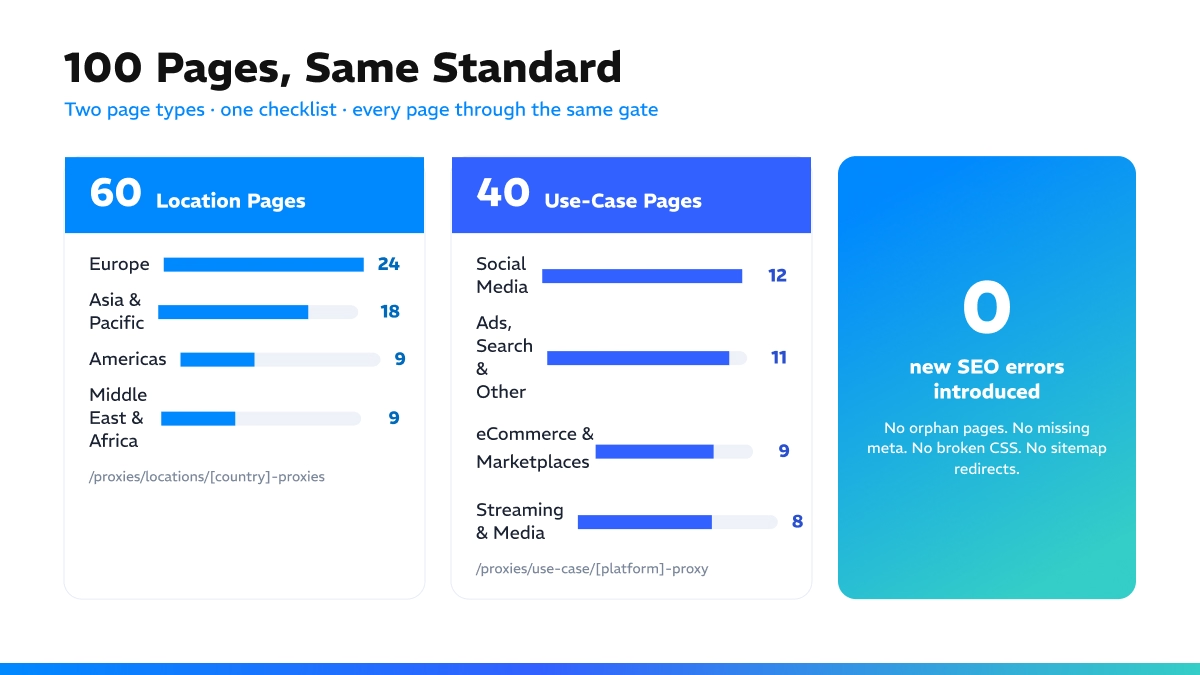
60 Proxy Location Pages
Country-specific proxy pages under /proxies/locations/, each following the same checklist-driven template. A sample of the locations published:
| Region | Sample Location Pages |
|---|---|
| Europe | Germany, UK, France, Italy, Spain, Netherlands, Sweden, Norway, Denmark, Austria, Switzerland, Portugal, Poland, Romania, Latvia, Russia, Belgium, Finland, Cyprus, Czech, Hungary, Moldova, Albania, Estonia |
| Asia & Pacific | India, Singapore, Japan, South Korea, Taiwan, Hong Kong, Vietnam, Thailand, Indonesia, Malaysia, Philippines, Pakistan, Nepal, Bangladesh, Uzbekistan, Kazakhstan, Australia, New Zealand |
| Americas | United States, Canada, Brazil, Mexico, Argentina, Colombia, Peru, Venezuela, Antigua |
| Middle East & Africa | Turkey, Georgia, Bahrain, Egypt, Morocco, South Africa, Nigeria, Angola, Ukraine |
40 Use-Case Pages
Platform- and scenario-specific proxy pages under /proxies/use-case/, each targeting a distinct search intent. A sample of the use cases published:
| Category | Sample Use-Case Pages |
|---|---|
| Social Media | Instagram, Facebook, LinkedIn, TikTok, Twitter, Pinterest, Snapchat, Reddit, Discord, Telegram, WeChat, Social Media (hub) |
| eCommerce & Marketplaces | Amazon, eBay, Walmart, Alibaba, AliExpress, ASOS, Vinted, Fiverr, Yelp |
| Streaming & Media | YouTube, Netflix, Spotify, Soap2Day, GoMovies, WatchSoMuch, Tamilyogi, TamilMV |
| Ads, Search & Other | Google Ads, Facebook Ads, DuckDuckGo, PayPal, Tinder, Omegle, OnlyFans, Swagbucks |
100 pages, two page types, one checklist. Because every page passed the same gate, the technical issues we fixed at launch never had a chance to come back.
The Results
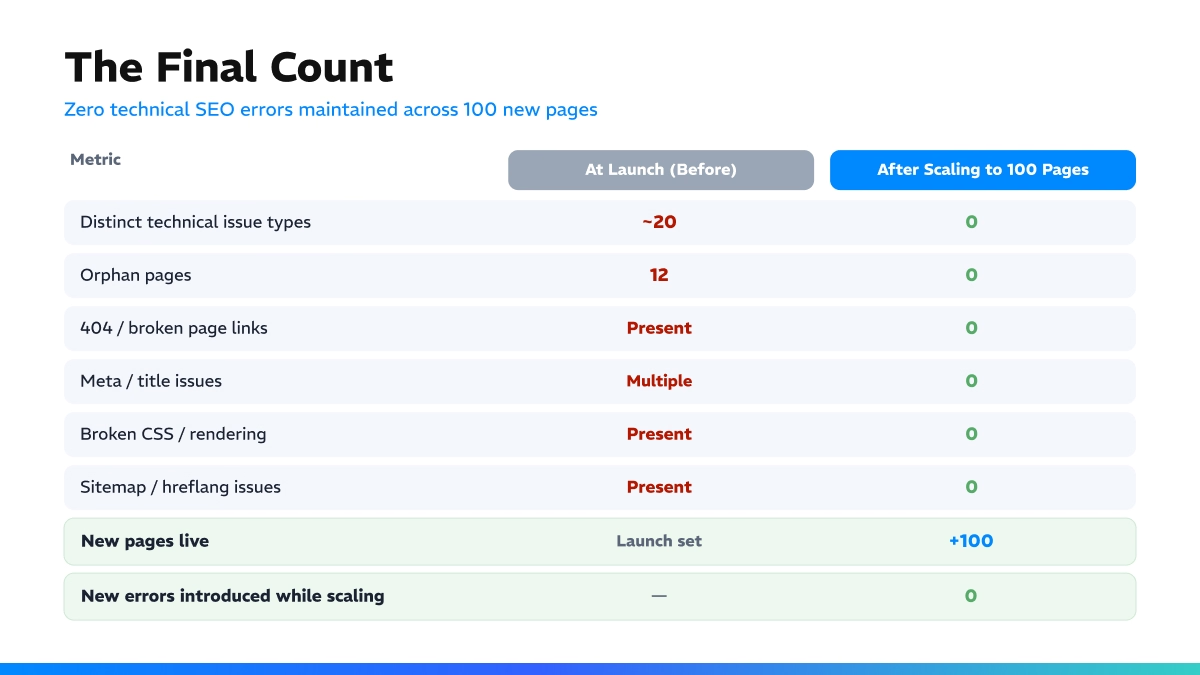
| Metric | At Launch (Before) | After Scaling to 100 Pages |
|---|---|---|
| Distinct Technical Issue Types | Nearly 20 | 0 |
| Orphan Pages | 12 | 0 |
| 404 / Broken Page Links | Present | 0 |
| Meta / Title Issues | Multiple (missing, too long, too short) | 0 |
| Broken CSS / Rendering | Present | 0 |
| Sitemap / Hreflang Issues | 3XX in sitemap, hreflang to broken pages | 0 |
| Total Pages Live | Initial launch set | +100 new pages |
| New Errors Introduced While Scaling | - | 0 |
Every issue from the launch audit was resolved, and the publishing checklist held the line: 100 new pages shipped without reintroducing a single technical SEO error.
Titles at 40 to 60 characters, metas at 140 to 155, keyword placement and internal links, verified on all 100 pages before publish. Our on-page SEO service runs that checklist across your site.
Explore Our On-Page SEO Service✅ What Worked
1. Starting at Launch Prevented Technical Debt
Because we were involved from day one, the nearly 20 issues we found were fresh, not buried under years of accumulated decisions. Fixing them early meant they never had time to compound across hundreds of pages, the cheapest possible moment to resolve technical SEO problems.
2. Turning Audit Findings into Prevention Rules
Every issue from the launch audit became a checklist item. "Meta description too long" became a character-range check; "Orphan page" became a mandatory internal-link step; "3XX redirect in sitemap" became a pre-submission sitemap check. The checklist isn't generic best practice. It's a direct map of the exact errors this site was prone to.
3. A Hard Gate Beats Good Intentions
Making the checklist a required gate - no publish, no index submission until every item passes - is what kept the error count at zero across 100 pages. Relying on memory or spot-checks at that volume would have let errors slip back in.
4. One Template, Two Page Types, Consistent Quality
Standardising location pages and use-case pages against the same checklist meant the 60th country page and the 40th use-case page met the same technical bar as the first. Consistency at scale is only possible with a documented, repeatable process.
5. Staged Indexing Kept Submissions Safe
Submitting 2–3 finished pages per day through Search Console, rather than dumping 100 URLs at once, kept the submission pattern clean and ensured each page was fully checklist-complete before Google ever saw it.
⚠️ Challenges We Navigated
1. Near-Duplicate Content Risk Across Similar Pages
Sixty country proxy pages and forty use-case pages share a lot of structural DNA. The real risk at this volume is near-duplicate copy. The checklist's duplicate/AI-content test on every page was essential to keep each location and use case genuinely distinct rather than templated filler.
2. Keeping Internal Linking Clean as Pages Multiplied
With every new page, the orphan-page risk returns. The discipline of linking each new page from its hub on publish, rather than batching it later, is what kept the orphan count at zero even as the site grew by 100 pages.
3. Mixed Domains During the Build
Some pages were staged on a build/staging domain before moving to the production domain. The redirection and canonical checks in the checklist made sure no staging URLs leaked into the sitemap or picked up stray internal links during the transition.
4. Catching Issues Manual Reviews Miss
Issues like an HTTPS page linking to HTTP, or a single 3XX entry sneaking into the sitemap, don't show up in a casual page review. Pairing the checklist with regular Ahrefs and ScreamingFrog crawls caught the structural issues that human review alone consistently misses.
📊 Key Learnings
A New Site Is Not an Error-Free Site
Even a fresh launch surfaced nearly 20 distinct technical issue types. Auditing at launch, before scaling, is far cheaper than fixing the same issues replicated across hundreds of pages later.
The Checklist Is the Real Deliverable
Fixing issues once is valuable; building a system that prevents them is transformative. The 32-point checklist is what let the project scale to 100 pages without a single regression. The audit fixes alone would not have held.
Prevention Scales; Cleanup Doesn't
Re-auditing and re-fixing 100 pages reactively would have been enormously expensive. Embedding the rules into the publishing process meant the marginal cost of keeping each new page clean was nearly zero.
Every Rule Should Trace to a Real Failure
The most effective checklists aren't generic. They're built from the specific errors a site has actually shown. Each item on this checklist maps directly to an issue from the launch audit, which is why it was so effective at preventing recurrence.
Zero Errors at Scale Is a Process Outcome
Holding 100 pages at zero technical SEO errors wasn't luck or one-off effort. It was the predictable output of a disciplined, repeatable publishing process applied consistently to every page.
Launching or Scaling a Site? Build It Clean From Day One.
Get your technical SEO assessment. We'll show you your current issues, the fixes, and a publishing process that keeps new pages error-free.
Get Your Assessment