The Challenge
The Brief:
Write high-quality blog content for a SaaS platform
Budget:
$5,000
A straightforward content engagement, nothing more.
The real challenge was the ceiling built into that brief. Most content agencies follow a template: research keywords, write 1,000-word posts, optimize for SEO, and hope for the best. That approach earns mediocre content that ranks occasionally and earns backlinks almost never.
The client wasn't asking for links. They were asking for content. The question we set out to answer was whether content alone, with zero outreach and zero link-building spend, could earn authoritative backlinks on its own.
The Strategy
We took a completely different approach, built around a single idea: create content that journalists and creators need to cite, not content that merely ranks.
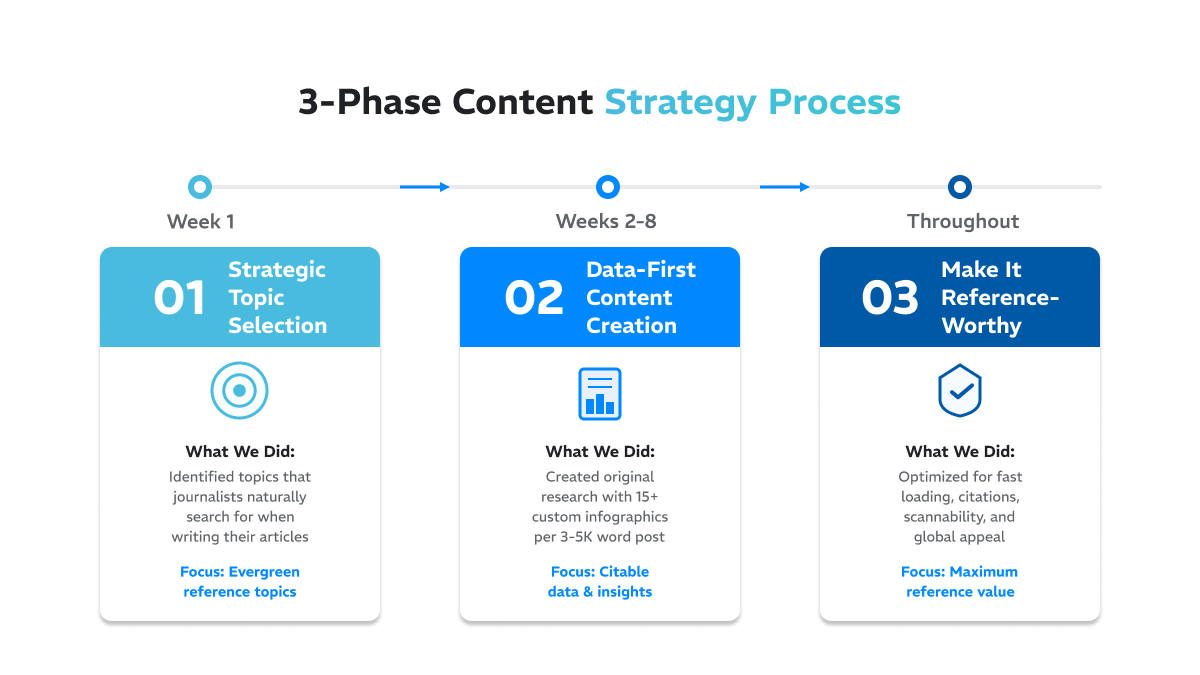
Phase 1 (Week 1): Strategic Topic Selection
Identify topics journalists naturally search for when writing their articles. Focus: evergreen reference topics.
Phase 2 (Weeks 2-8): Data-First Content Creation
Original research with 15+ custom infographics per 3-5K word post. Focus: citable data and insights.
Phase 3 (Throughout): Make It Reference-Worthy
Optimized for fast loading, citations, scannability, and global appeal. Focus: maximum reference value.
Data-first research posts with custom graphics. That is our SEO content writing service.
The Execution
Each post took roughly two weeks to research, write, design, and finalize: 3,000-5,000 words with custom graphics. Rather than chasing keyword volume, we produced deep, original research pieces built to be quoted directly, with exact numbers, percentages, and timeframes rather than vague generalizations.
Every statistic was verified and properly sourced so the content read like output from a research organization, not a random blog. Clear formatting, quotable stats, and downloadable charts removed all friction from the citing process.
The Results
Here's what happened after we delivered the content.
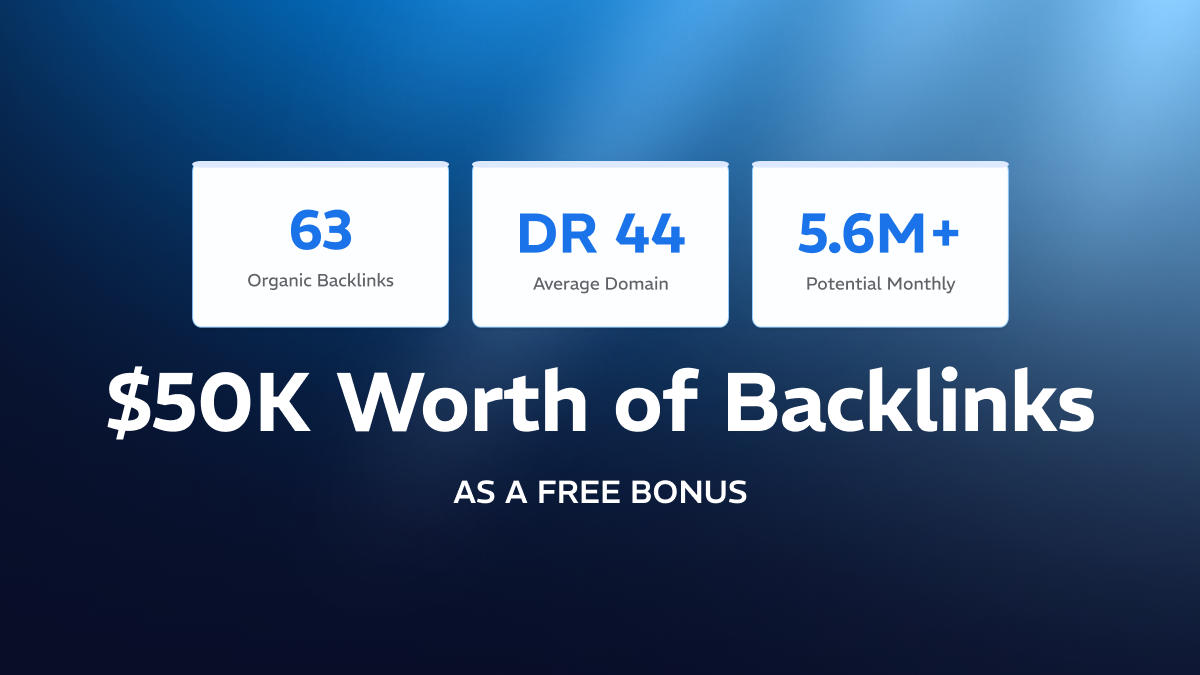
These weren't low-quality directory links or forum spam. Every single backlink came from a real website with real traffic, and they linked because the content was genuinely useful to their audience.
Breakdown by Quality Tier
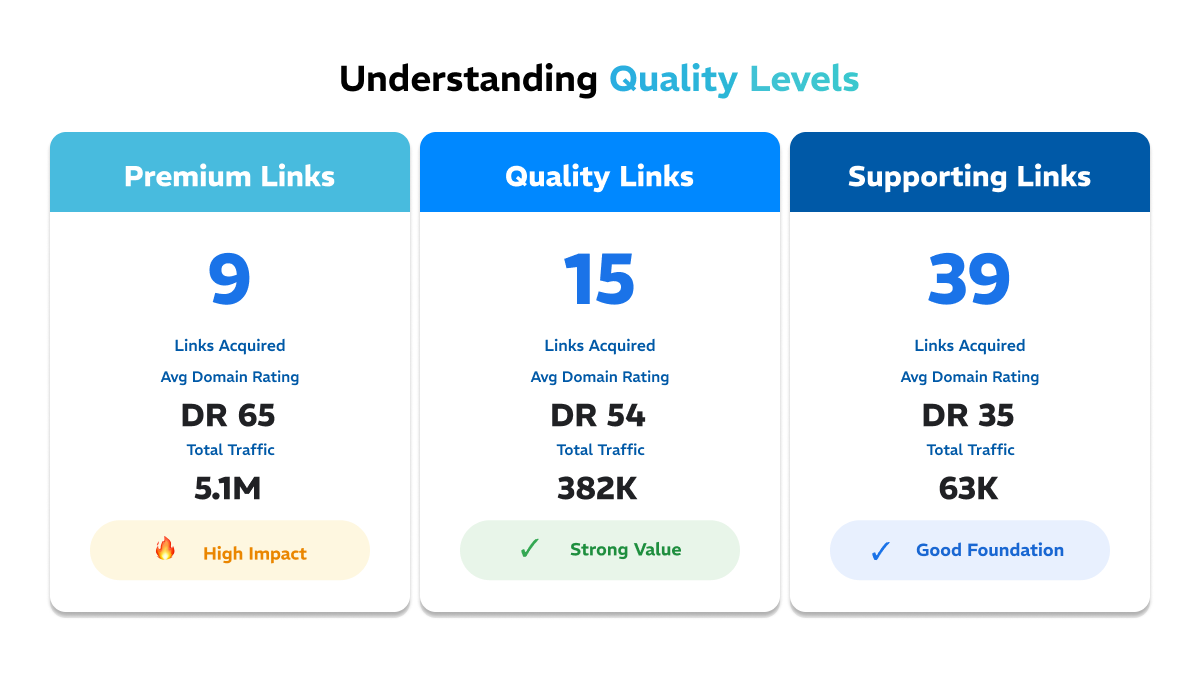
The 9 premium links alone brought potential exposure to over 5 million monthly visitors, the kind of placements most agencies charge $1,000-$3,000 each to acquire through outreach.
Top 10 Backlinks We Earned
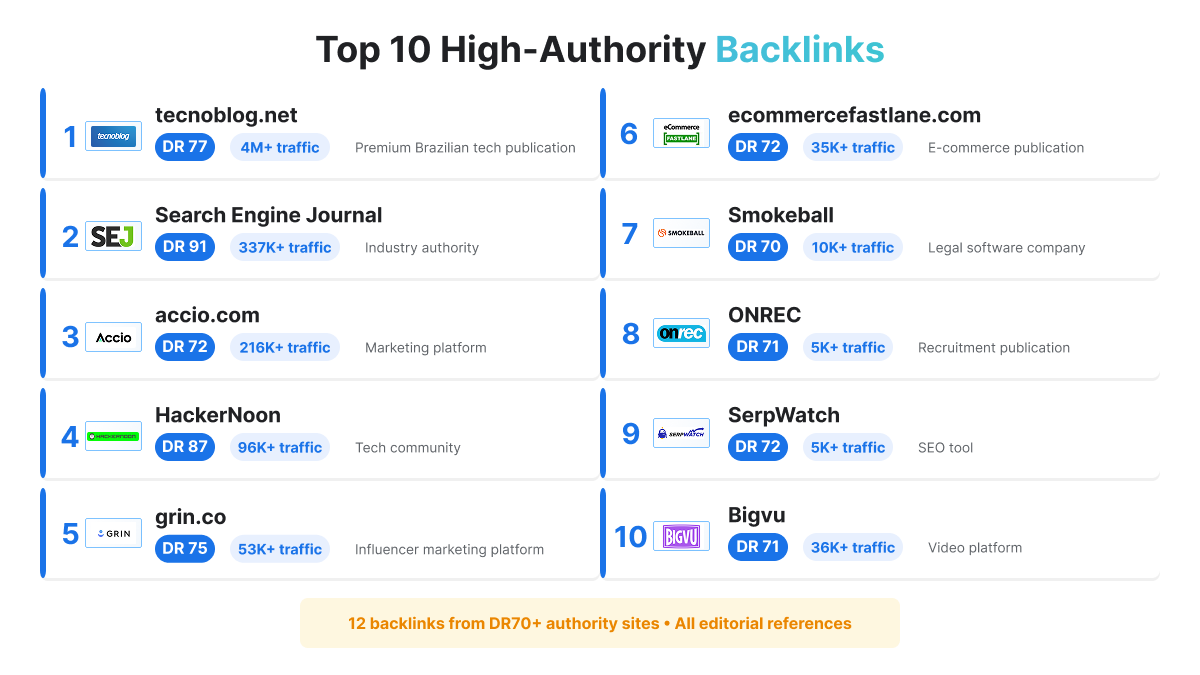
These were real publications, not hypotheticals. 12 of the 63 came from DR 70+ domains. Most importantly, these weren't paid placements or reciprocal links, these publications found our content, found it valuable, and linked to it editorially.
Real-World Proof
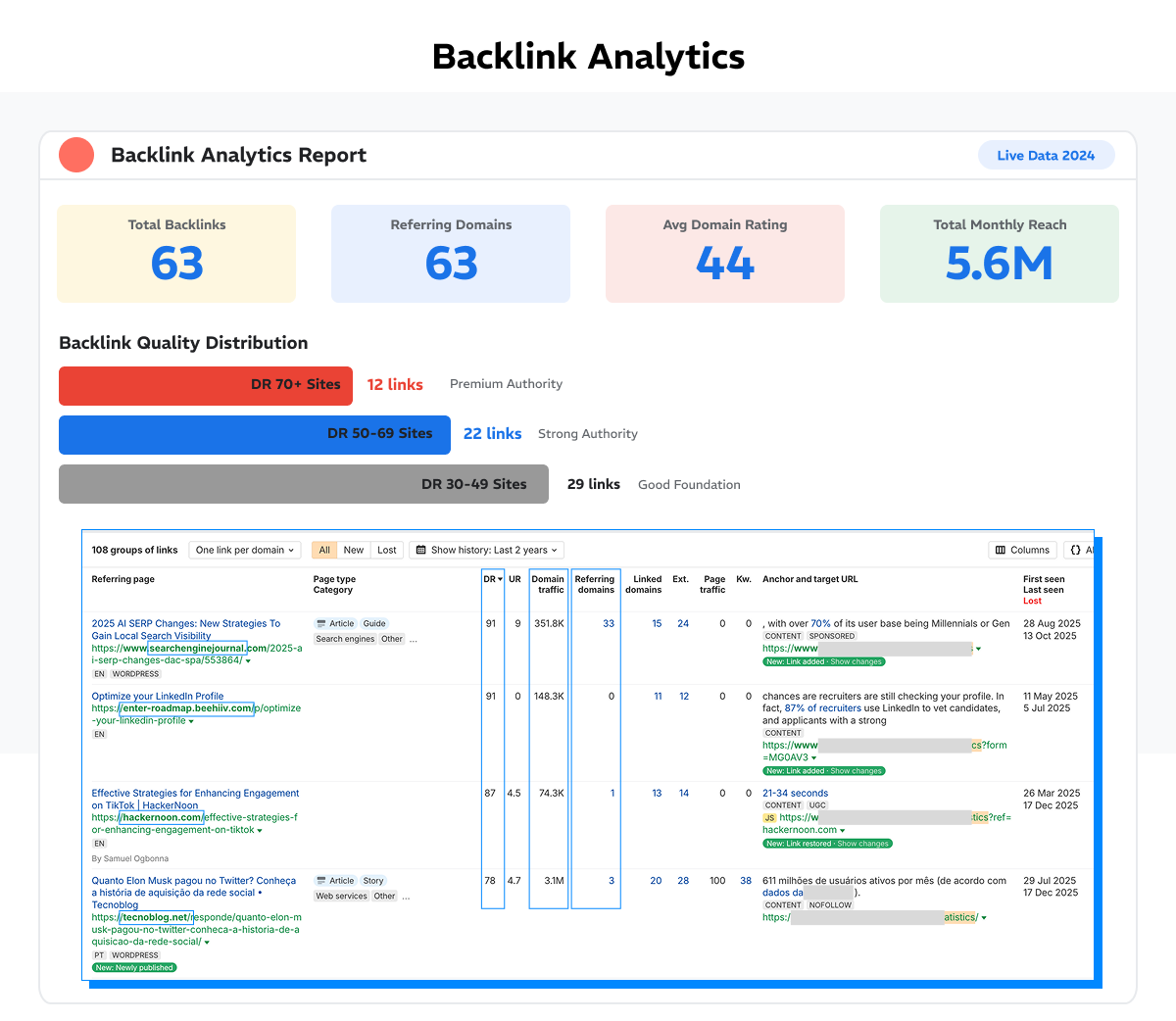
Then two things happened that surprised even us:
Cross-Language Success
Our content didn't just attract English-language sites:
tecnoblog.net (Portuguese, 4M+ traffic)
Cited our content
xataka.com.co (Spanish, 37K+ traffic)
Referenced our research
maresmedia.se (Swedish, 87K+ traffic)
Used our data
Good data transcends language barriers. When you provide valuable research, international publications find ways to reference it.
AI & LLM Citations
ChatGPT, Perplexity, and Gemini started referencing our data in their responses, before some pages even ranked #1 on Google.
This content earned 63 backlinks worth $50K, but the first ones took 60+ days to appear. Our link building service lands high authority links on a schedule.
Explore Our Link Building ServiceWhy It Worked
Journalists and content creators are under pressure to publish quickly while staying credible. They need reliable sources they can cite without spending hours verifying information. When writers at Search Engine Journal, HackerNoon, or TecnoBlog needed data to back their claims, they found our content. Here's why they chose us over competitors:
1. We Had the Specific Data They Needed
Exact numbers, percentages, and timeframes they could quote directly, not vague generalizations.
2. Our Content Looked Authoritative
Professional design, proper citations, clear methodology. It looked like content from a research organization, not a random blog.
3. It Was Easy to Cite
Clear formatting, quotable statistics, and downloadable charts. We removed all friction from the citing process.
4. The Data Was Current
We regularly update our content with the latest numbers. Nobody wants to cite outdated statistics.
5. We Were a Neutral Source
We presented data objectively without pushing a product or agenda, which made us more trustworthy and cite-worthy.
Honest Caveats
This approach isn't a quick win. It requires significant investment, not necessarily in money, but definitely in time, expertise, and patience. Here's what made this difficult:
Topic Saturation
Many DR70+ sites already ranked for related topics. We weren't entering an empty playing field.
Data Verification
Finding trustworthy statistics from credible sources took serious time. Every stat needed to be verified and properly sourced.
Content Depth
Each post took approximately 2 weeks to research, write, design, and finalize: 3,000-5,000 words with custom graphics.
Design Work
Creating 15+ custom infographics, charts, and visualizations per article requires skilled designers.
Patience Required
The first backlinks started appearing 60+ days after publishing. Some content took 90+ days. This isn't instant gratification.
Key Takeaways
After completing this project and watching the backlinks roll in month after month, here are the key takeaways:
1. Data Beats Opinions (Every Time)
Journalists and bloggers need facts to support their writing, not opinions or hot takes. When you provide original data and research, you become a cite-worthy source.
Actionable insight: If you want backlinks, create content that answers "What are the numbers?" not just "What do you think?"
2. Think Like a Journalist, Not an SEO
Ask yourself: "Would I cite this in my own article?" If not, make it better.
Actionable insight: Ask yourself: "Would I cite this in my own article?" If not, make it better.
3. Go Deep, Not Wide
One comprehensive 5,000-word research post with custom graphics beats ten shallow 500-word "tips" articles.
Actionable insight: Cut your content volume in half. Double your quality and depth.
4. Patience Compounds
In the first 60 days, we saw maybe 5-10 backlinks. By month 6, backlinks were coming in weekly without any additional work.
Actionable insight: Judge content marketing on 6-12 month timelines, not 30-day sprints.
5. Topics > Keywords
We didn't optimize for "keyword 2024" or "keyword statistics." We optimized for comprehensive topical coverage.
Actionable insight: Stop thinking in keywords. Start thinking in topics and concepts.
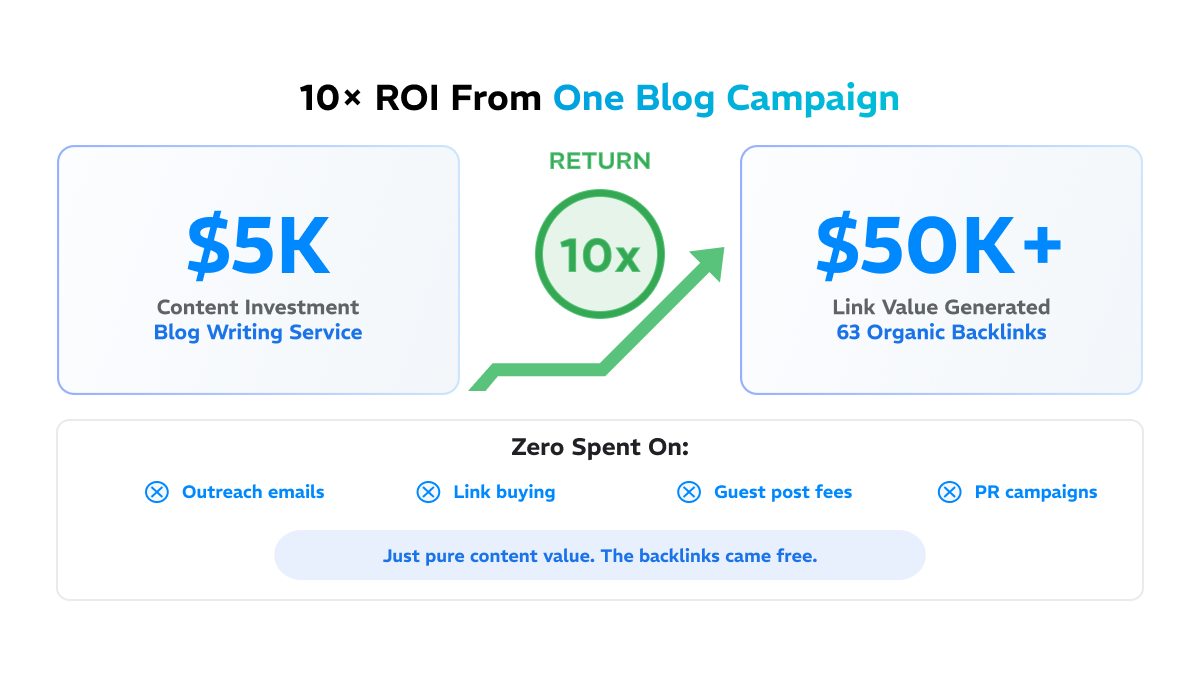
The best part?
These links will continue sending traffic for years. Editorial links earned through valuable content tend to stay because they're genuinely useful references.