My team has been working with a SaaS company that sells social media services. Last year, we started implementing international or multilingual SEO methods to increase their reach in other regions.
As a result, we obtained:
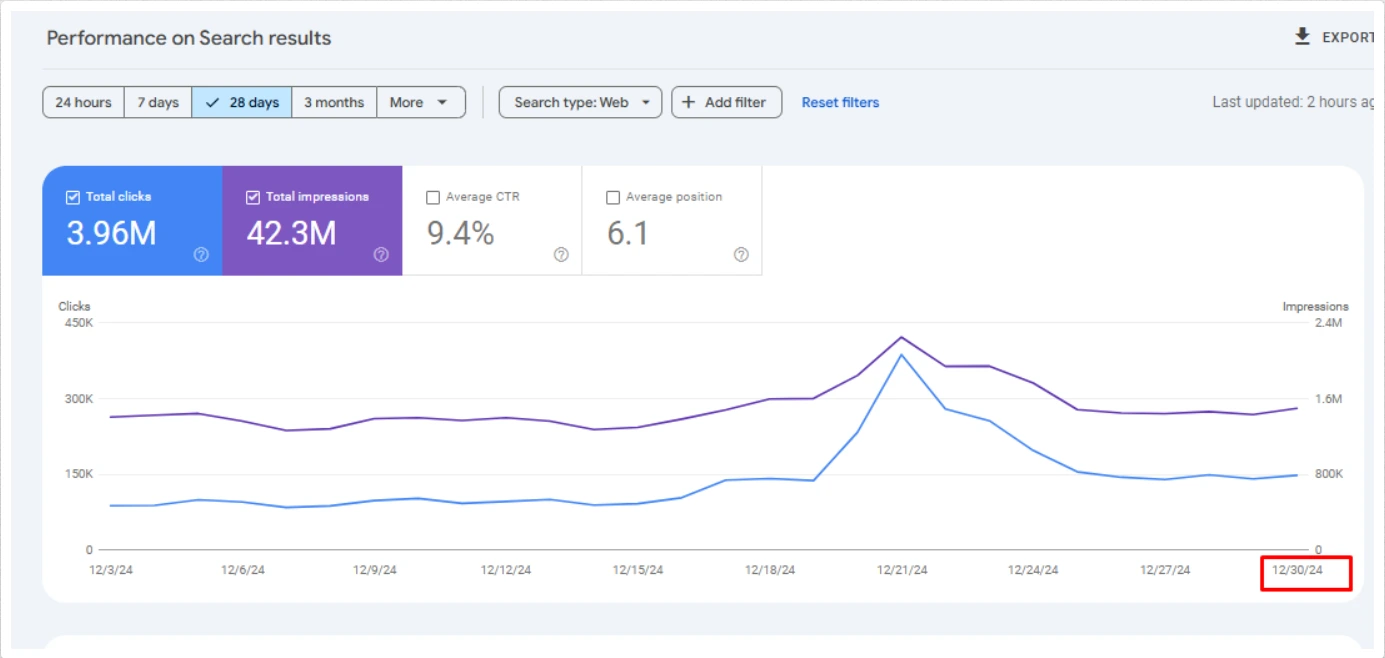
Around 4 million organic search traffic
More than 42 million impressions
Nearly 7500 keywords ranked in SERP outside the US (mainly Spain)
In this case study on multilingual SEO, we will describe our success story in detail with all the strategies we used. You can learn how to reach non-native audiences with your service and ensure sales.
About SEOSkit
SEOsKit is a thriving search engine marketing company. We have assisted over 100 businesses, including Colgate, Adobe, Huawei, and Made-in-China, with marketing strategies, services, and consulting. Our business objective is to achieve the highest ROI for our clients from different marketing channels with updated techniques and strategies.
Case Overview: Expectations & Demands
It's been more than two years since we started working for this SaaS business. The company hired us when the site was just launched. In the first year, we had the target of gaining 100k search traffic.
By the 11th month, we achieved our goal. Our target for the next year was to reach 300K traffic with this Shopify site. As the target was 3x more than the previous one, We thought of doing something advanced. And so, we had a meeting with the owner and started our journey in multilingual SEO.
As the products were all digital services, it was easy for us to reach people from other countries and convert them into buyers. If they were physical products, we would've struggled a bit more, as delivery, payment, and other issues would become complicated.
Now, let's head to the main discussion where we'll share our strategy to overcome challenges and gain our target.
Key Challenges
Optimizing for non-native regions by understanding their search intents
Proper and in-depth keyword research in another language
Writing and translating blog or marketing content
Secure backlinks from local authority sites with different languages
Our multilingual SEO service handles hreflang, localized content, and keyword research market by market.
A Profound Multilingual SEO Strategy
Here is our total journey till this date. You can understand what to do for international SEO from this roadmap.
Keyword Research According to the Local Region
First of all, we tried to understand what terms local traffic used to search on Google. We picked keywords according to search intents. Then translated them into the local language.
We used Ahrefs and SEMrush to figure out data like SV (search volume) and CPC. Our team tried to list low-KD yet high SV keywords to quickly gain authority in this 1-year-old website. We only worked on those high-difficulty keywords that we could easily rank on.
Optimizing Technical Aspects
Before this strategy, the site was solely in English. To make its valid and rankable copy in another language, we:
Used hreflang tags from the beginning. Using it in the middle of the project might harm the pages
Purchased a local IP and server for authenticity
Kept the English-US version of the site as the canonical version
Tried to the 1:1 ratio in the number of pages in both languages
Created a symmetrical structure between the site versions
Kept consistent interlink structure between the versions and prioritized the canonical version in interlinking; anchor texts were also kept the same
Created a different sitemap for the Spanish language
Focused more on URL and directory before implementation
We made the whole website technically sound so that our strategy wouldn't backfire or fail.
Testing & Indexing
We tested the revised structure and made sure there were no 404 errors or deindexed URLs in the sitemap. Most of the new pages we created for the Spanish locals were naturally indexed. However, some required manual index requests. We signaled search engines for that. But we didn't go for force indexing.
Hiring Professional Translators
Neither we nor the client had a native Spanish speaker. So, we hired professional translators to convert the existing pages into another language. We didn't go for plugins like Weglot that won't translate without changing the core meaning.
Google always prefers human-first articles, this decision helped our work a lot. The people we hired were mostly locals. As they would prefer localized tones and phrases more than bookish structure and grammar. This method is called content localization.
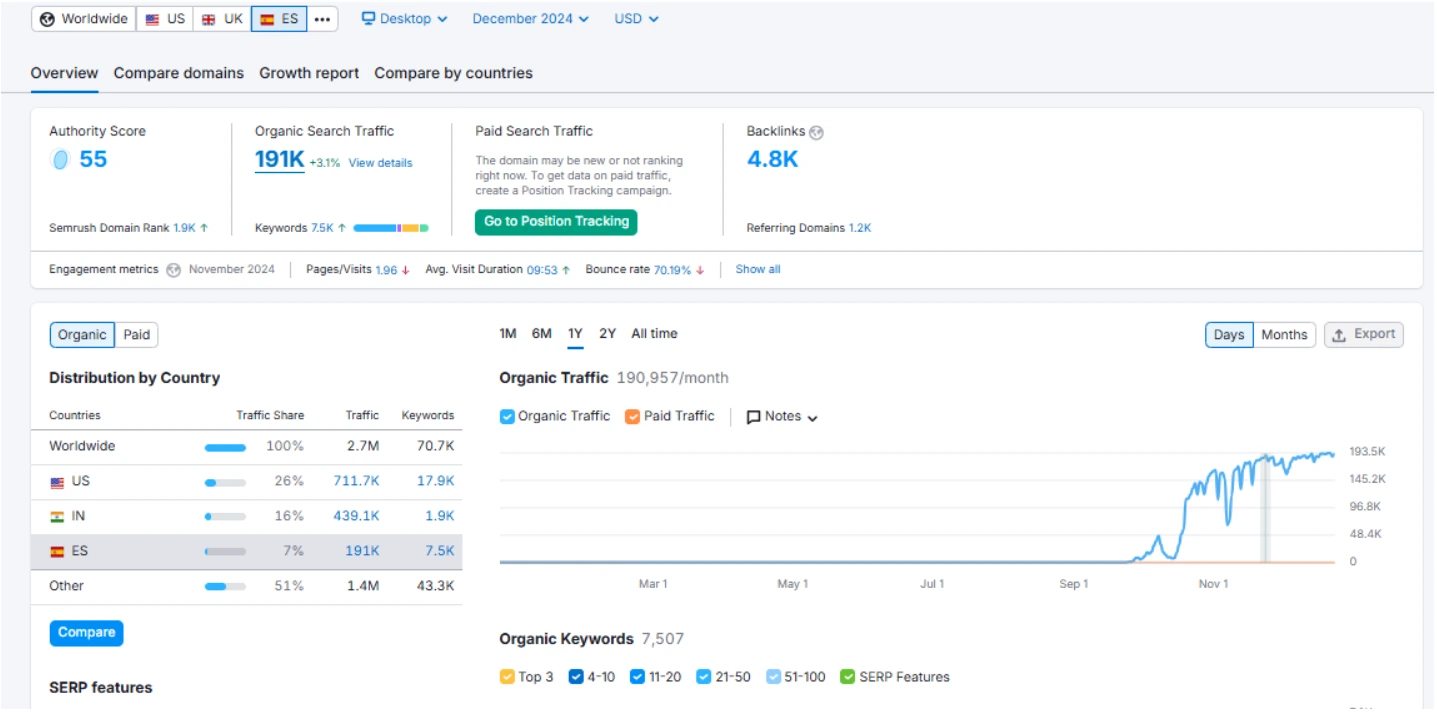
Existing pages that required translation got separate copies for localized searches. As there are nearly 400 pages till now in English, translators couldn't catch up with the number in a year.
And for new posts, our work was simple. We created the main article in English. Later, the translator would make a localized copy without changing the core meaning. Our on-page team gave them the keywords and key anchors so that writers wouldn't change them while converting. Semantic SEO was widely used during this phase.
Acquire Targeted Language/Region Backlink
Our in-house outreach team worked for several months to find authority sites based on those local areas. We approached them with proposals like guest posts, link insertion, etc. that would benefit both parties.
Team members didn't forget to audit competitor sites to figure out the possible authority sites that would also love to align with us. In this case, we used SEMrush and Moz to figure out possible link opportunities. We were able to skip the spammy links because of those tools.
The team made a list of priority pages that required the most link juice. Links to those pages were used as anchor links. Translators also helped us to generate natural anchor texts for guest posts.
Content Writing in Different Languages
We spent most of the budget on quality content writing and guest posting. As the niche was digital service, we had our own expert and experienced writers. They crafted quality blogs. Translators aligned with them to create copies in another language, as said previously.
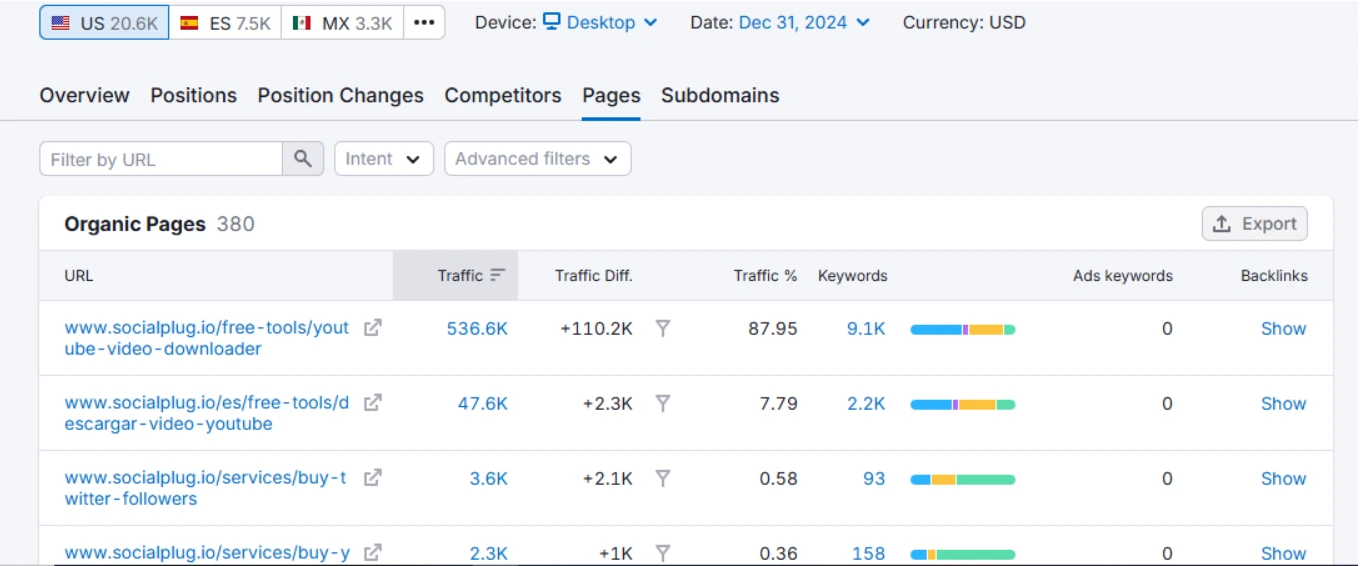
As for guest posts, things went the same. We tried to give real value and in-depth information in guest posts so that they'd rank quickly and give some organic referrals from different regions.
Regular Monitoring

We said in the main case study of this SaaS project that performing multilingual SEO was a challenge that we personally took to meet the goal of 300K traffic in the second year.
As it was not a direct expectation from the client, failing here would give us a bad reputation. So, our team kept everything in check. We often took help from local SEO experts regarding market analysis and improvement scopes.
If some pages dropped rank, we would audit and observe and see if we lack something compared to the competitors.
Results Beyond Expectations
So, what was our goal again? 300K organic traffic by the second year, right? But we achieved 4 MILLION!
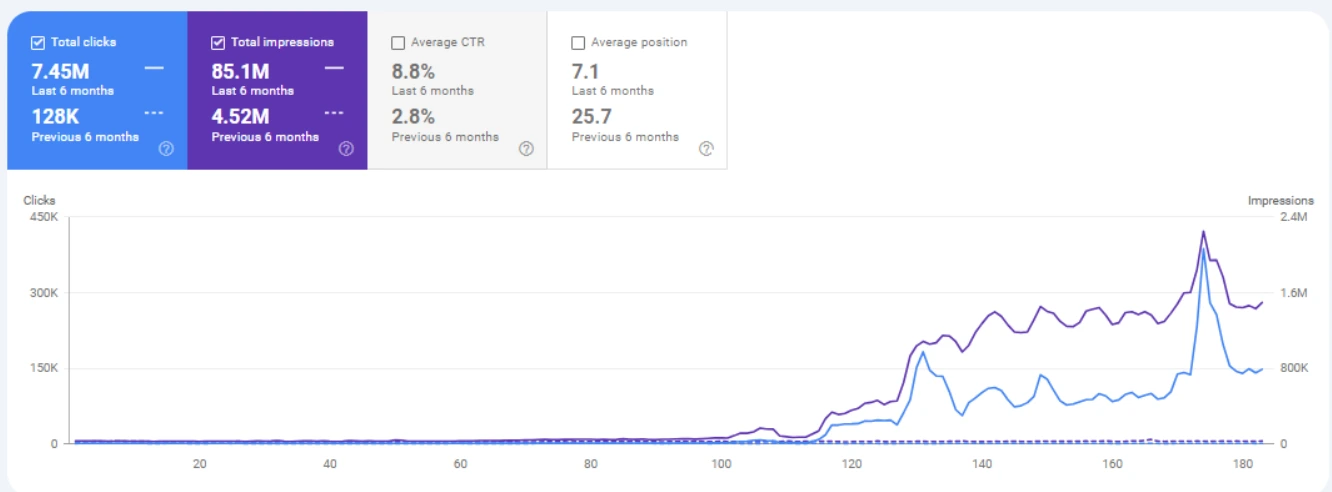
The result was so mind-blowing that we also thought tools were showing unrealistic data. But it is indeed real. If you look at the following data and compare it with other records given in the above sections, you'll notice that the massive growth started in the final months of the year.
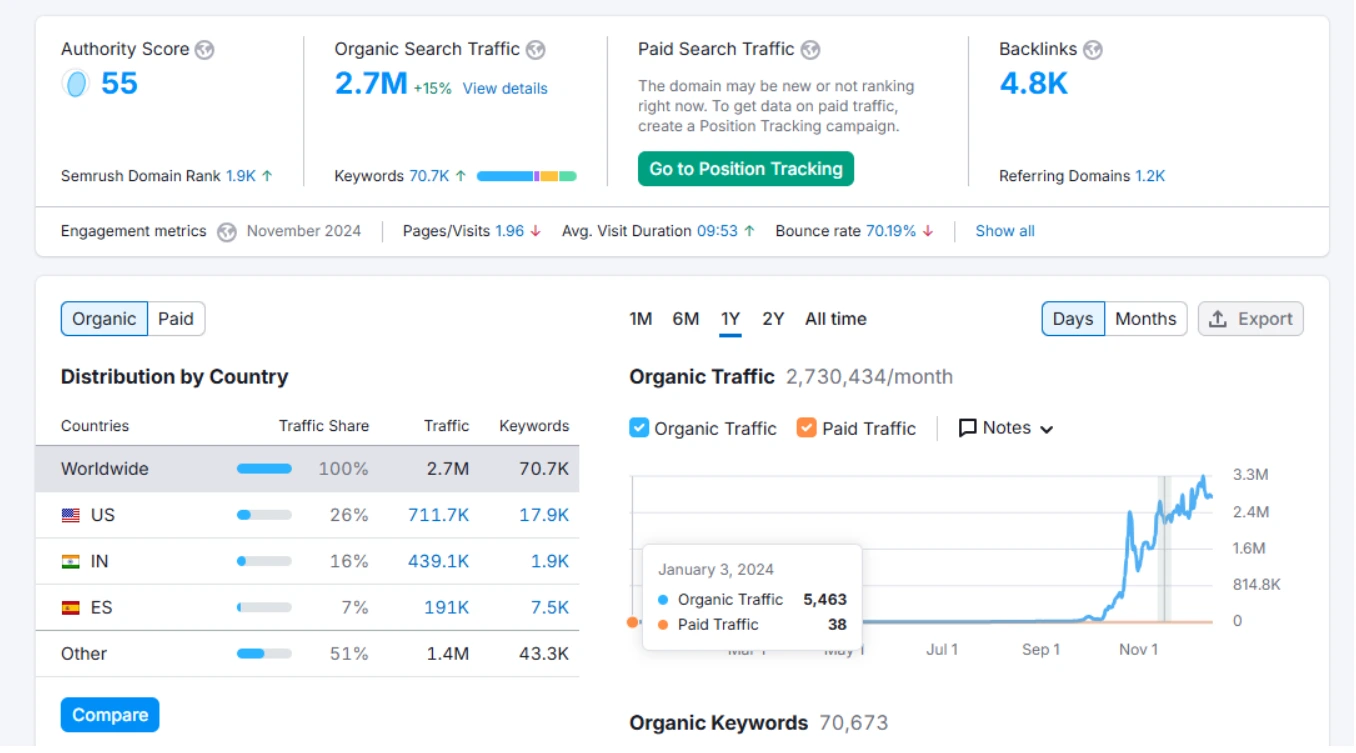
Like others, we also thought it was a temporary rank due to Google Dance. But it's been quite a few months, and the growth isn't going down.
Finally, we can say that our mission was a success. Now, we aim to double this growth through some new strategies. We will share case studies based on those as well.
Localized pages and local authority took this site from a 300K target to 4 million visits. Our multilingual SEO service builds the same setup across your languages.
Explore Our Multilingual SEO ServiceIn Short
Multilingual SEO lets sellers reach buyers from other regions
Optimizing and writing for different locations allow you to grow faster than your competitors
Making a name across several countries would allow you sustainable growth
Ranking in different regions opens a pathway for international branding that attracts a huge amount of localized traffic
When a site creates content in different languages, it creates relevance and lets authority sites from other regions link with the localized pages naturally
We Will Be Your International SEO Partner
Good bye, Hasta la vista, Selam, Hosca kal, or Namastay. Whatever your word is, we are fit to SEO on that specific language and tone.
SEOSkit is your affordable SEO solution that delivers quick results with advanced and white-hat strategies. Just give us a heads up and we'll be there to hear you.
Contact Us Now