The Challenge: Technical Issues Before the Site Had Traffic
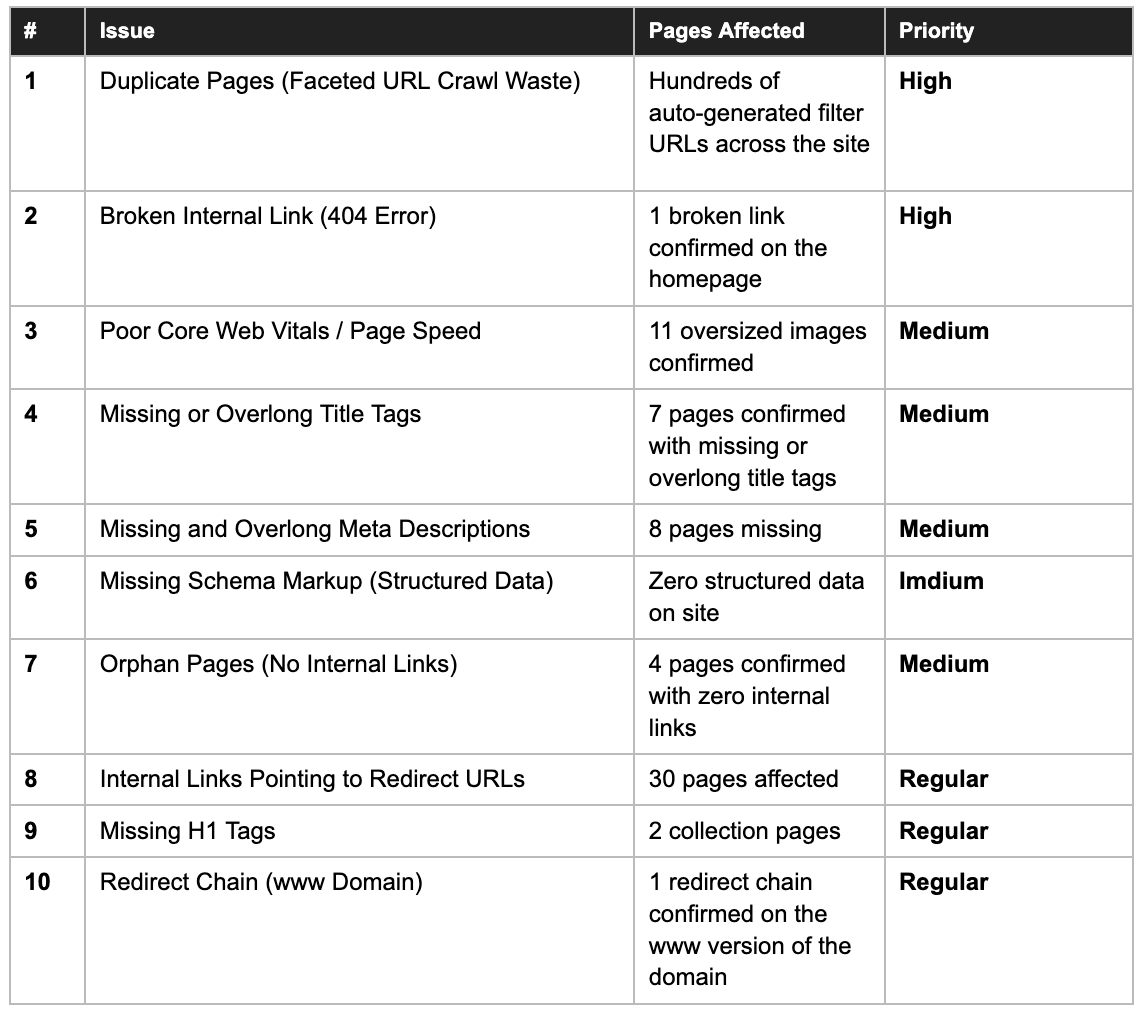
A new Shopify store in the alt wine niche, non-alcoholic and THC-infused beverages, was preparing for launch with a comprehensive SEO strategy. Before any on-page optimization could be effective, a full technical audit was needed to ensure Google could correctly crawl, interpret, and index every page on the site.
Technical issues on a new site are especially costly. Unlike an established site with existing traffic and authority to absorb problems, a new domain depends entirely on Google correctly reading every signal from day one. A canonical error on a new site doesn't just affect one page, it can split the authority signal across multiple URLs before the site has built any authority to split.
The brand also operated three redirect domains, product-specific vanity URLs, that pointed to the main Shopify store. Whether these 301 redirects were configured correctly and passing link equity to the right destination pages was unverified. Additionally, the Google Search Console setup had dual-property confusion from www and non-www versions of the domain being analyzed separately.
The brief: run a comprehensive technical SEO audit and fix every issue before on-page optimization began, ensuring every subsequent SEO action landed on a clean foundation.
The Strategy: Crawl First, Fix Before Optimizing
The guiding principle was simple: on-page optimization applied to a technically broken page is wasted effort. A page that Google can't correctly crawl or a URL with split canonical signals won't rank regardless of how good the copy is. The technical audit came first, and nothing else started until the audit was clean.
The audit covered six areas: canonical tag configuration, robots.txt review, redirect chain verification, schema markup audit, Google Search Console setup and property configuration, and XML sitemap validation. Screaming Frog was used for crawl-level analysis; GSC for indexing and coverage status; Ahrefs for backlink and redirect verification.
Fixes were prioritized in order of indexing impact: anything preventing pages from being crawled or indexed was fixed first; canonical and redirect issues second; schema implementation third; GSC configuration last.
Our Shopify SEO service covers technical, on-page, and content in one plan.
The Execution: Audit, Fix, Verify
Canonical tag audit and configuration
CanonicalsShopify's default behavior outputs canonical tags on all pages pointing to the non-www version of the domain. The audit verified that all 16 pages had correctly configured self-referencing canonical tags and that no collection page was canonicalizing to a product page (a common Shopify issue when products appear in multiple collections). The /collections/simple-blanc and /collections/simple-noir pages were verified to have distinct, self-referencing canonicals, not cross-referencing each other despite having similar content structures.
Robots.txt review and correction
CrawlabilityShopify's default robots.txt blocks certain internal URL patterns (/collections/?sort_by, /search, /checkout, and others) which is correct. The audit verified that no collection page or product page was inadvertently blocked. A critical check on Shopify stores with custom apps: some third-party apps add URL parameters that can be accidentally included in robots.txt disallow rules. All core SEO pages were confirmed as crawlable.
Redirect chain verification: three vanity domains
RedirectsThe brand operated three product-specific vanity domains, separate URLs for each product line, that were intended to 301 redirect to the main store. HTTP header checks confirmed the redirect status codes, destination URLs, and whether any redirect chains existed (e.g., www → non-www → main domain, creating a 2-hop chain rather than a clean single-hop 301). Redirect chains dilute link equity. All three vanity domains were confirmed to deliver clean single-hop 301 redirects to the correct destination pages, not just the homepage.
Google Search Console: property configuration and Domain Property setup
GSCThe store had been analyzed in the wrong GSC property, a www-prefixed URL property rather than the canonical non-www version. This created confusion in the coverage report. The Domain Property (which covers all variants: www, non-www, http, https) was set up as the primary property, unifying all indexing data under a single view. A Loom walkthrough was provided to the client explaining the difference between URL-prefix properties and Domain Properties, and why the Domain Property is the correct setup for all new Shopify stores.
Schema implementation: 6 types across 16 pages
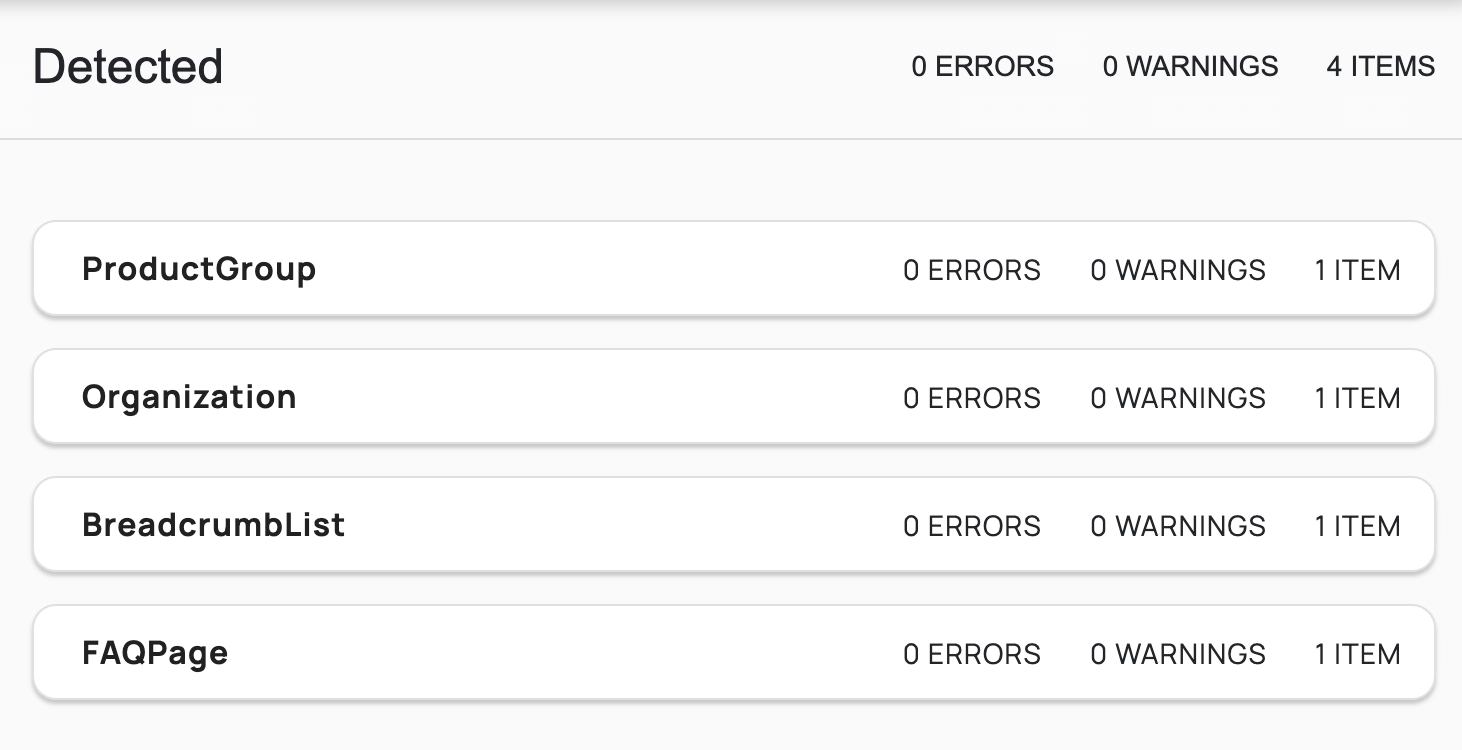
SchemaThe technical audit revealed zero schema markup sitewide. Six JSON-LD schema types were implemented via Shopify theme.liquid injection: Organization (homepage), WebSite (homepage), CollectionPage (6 collection pages), Product with Offer (4 product pages), FAQPage (collection pages and hub page with FAQ blocks), and BreadcrumbList (sitewide). Schema was validated against Google's Rich Results Test before submission.
The Results: Clean Technical Foundation From Day One
All technical issues identified in the audit were resolved before on-page optimization began. The site went into its optimization phase with a clean crawl, correct canonical configuration, verified redirects, complete schema coverage, and a properly configured GSC Domain Property.
Zero canonical errors, 6 schema types, and 100% of pages indexed before launch. Our technical SEO service runs the same audit and fix for your site.
Explore Our Technical SEO ServiceWhy It Worked
Technical SEO on a new site has a different priority order than on an established site.
Getting technical right before on-page means every optimization compounds cleanly
SequencingOn a new site, the sequence matters more than on an established site. If canonical tags are wrong when pages first get indexed, Google indexes the wrong URL. Fixing canonicals later doesn't immediately fix the indexed URL, it requires recrawl and re-indexing time. Starting clean means the first index is the correct index.
GSC property confusion is extremely common and costs real data
GSC setupThe majority of new site owners set up a URL-prefix GSC property (e.g., https://www.domain.com) rather than a Domain Property. This means they're only seeing data for one URL variant, and if the canonical is non-www but they're analyzing www, they see a fraction of the real coverage data. The Domain Property fix is a 10-minute change that immediately gives a complete, accurate picture of the site's indexing status.
Schema on a new site is faster to rank with than on an established one
Schema timingWhen Google first crawls a new page, it processes the schema as part of the initial indexing. A new page with complete FAQPage and Product schema gets evaluated for rich results eligibility from its first crawl. An established page that adds schema retroactively has to wait for a recrawl. Implementing schema before the site has traffic is actually the optimal timing.
The Honest Caveats
Technical clean doesn't mean rankings.
A technically clean site is the necessary condition for SEO to work, it's not sufficient on its own. Rankings still require on-page optimization, content quality, and eventually link authority. The technical work removes the ceiling; on-page and link building set the floor.
Some Shopify technical limitations are not fixable without theme changes.
Shopify generates certain URL parameters (sort_by, page) automatically. While robots.txt disallows the most harmful ones, some parameterized URLs will still appear in coverage reports as "Crawled, currently not indexed." This is expected and acceptable on Shopify stores.
Key Takeaways
Do the technical audit before on-page optimization, not after.
On-page work on a technically broken page is wasted effort. Fix crawlability, canonicals, and indexing first. Then optimize.
Set up a Domain Property in GSC, not a URL-prefix property.
The Domain Property covers all variants (www, non-www, http, https) and gives a complete, accurate view of indexing status. Most new sites are set up incorrectly with URL-prefix properties.
Verify redirect destinations, not just redirect status codes.
A 301 status code doesn't tell you where the redirect goes. Verify the destination URL explicitly, especially for vanity domains where the intended destination is a specific collection page, not the homepage.
Implement schema before the site has traffic, not after.
New pages processed by Google with complete schema get evaluated for rich results from their first crawl. Retroactive schema implementation requires a second crawl cycle. First-crawl schema eligibility is a real advantage on new sites.
Not Sure if Your Technical SEO Is Clean?
We'll crawl your site, check canonicals, verify redirects, and audit your schema, and tell you exactly what needs fixing before you spend another hour on content.
Get a Free Technical Audit