The Travel SEO Problem Nobody Talks About
Most travel blogs don't have a content problem. They have a content structure problem.
A blog covering the same destination across multiple posts (an itinerary, a hotels guide, an activities roundup, a couples trip) creates an invisible ranking ceiling. The posts were written independently, without any shared keyword strategy. They end up competing with each other for the same search queries instead of supporting each other toward a shared ranking goal.
This is one of the most common patterns we see on established travel blogs. The content is good. The writer has genuine experience. The affiliate infrastructure is in place. But the SEO architecture is actively working against the site, splitting authority, confusing Google, and capping rankings at positions 20–30 on keywords the blog genuinely deserves to rank for.
This case study walks through exactly how we diagnose and fix that pattern, and what the rankings look like within weeks of implementation.
The core travel SEO insight: Google doesn't rank individual blog posts. It ranks the topical authority of a site within a destination cluster. When your posts about the same destination work together, the whole cluster rises. When they compete, the whole cluster stalls.
What the Audit Found
Before touching anything, we audited the destination cluster, 4 blog posts covering the same location from different angles. Here's what the data showed:
Keyword Problems
- ✗ Same primary keyword targeted across 2 different posts
- ✗ No keyword mapping document, posts written without SEO differentiation
- ✗ Both cannibalizing posts ranking in positions 20–30 instead of one in top 5
- ✗ High-value keyword sitting outside top 50 despite matching content existing on site
Structure Problems
- ✗ No defined pillar post, all 4 posts treated as equal
- ✗ Almost no internal links between the 4 related posts
- ✗ No links from supporting posts to the strongest page
- ✗ Paid digital travel guide not referenced anywhere in the cluster
On-Page Problems
- ✗ Multiple H1 tags on every page (template issue sitewide)
- ✗ Heading hierarchy broken, H3 appearing before H2
- ✗ Inconsistent meta titles, brand suffix eating character budget
- ✗ Poor image alt text across 100+ images
Revenue Problems
- ✗ All CTA buttons using "Click Here", no conversion intent
- ✗ Affiliate CTAs unevenly distributed, some hotels had 5 CTAs, others had 1
- ✗ No travel insurance affiliate section, high-converting product missing entirely
- ✗ Paid digital guide not promoted anywhere in related posts
Our travel SEO service maps every cluster so your posts stop competing with each other.
Our Travel SEO Approach
Travel SEO is different from most niches. The content is long, personal, and destination-specific. Readers are in research mode, high intent, comparing options, and ready to book. Getting the structure right matters more than publishing volume.
Our approach for travel blogs follows three phases in order:
Audit before touching anything
Always firstGSC data, Ahrefs keyword positions, crawl report, and content review across every post in the destination cluster. We map what's currently ranking, what's cannibalizing, what's orphaned, and where the internal linking gaps are. No optimization starts until we have a clear picture of the existing state.
Build the cluster architecture
Structure firstAssign one clear primary keyword and intent to each post. Identify the pillar page. Map internal linking flows. Define where the paid guide or affiliate product sits in the reader journey. This architecture work happens before any content is changed, because changing content without fixing the structure just moves the problem around.
Optimize with a checklist, not instinct
SystematicEvery post goes through a 36-point on-page SEO checklist: title tag, meta, H1, heading hierarchy, body copy keyword integration, internal links, image alt text, affiliate placement, CTA copy, date freshness. Nothing is left to judgment, every signal is checked and documented before and after.
The Cluster Strategy in Practice
A destination cluster works like this: one pillar page owns the high-volume planning intent. Supporting posts own the specific sub-intents. Internal links route authority upward to the pillar and across to the paid product. Every post reinforces the others rather than competing.
Primary keyword: [destination] family itinerary
best family hotels [destination]
things to do with kids [city]
[destination] couples itinerary
| Post Type | Role | Primary Intent | Revenue Driver | Links To |
|---|---|---|---|---|
| Full Family Itinerary | Pillar | High-volume planning intent | Paid guide + activity bookings | Hotels post, Activities post, Paid guide |
| Hotels Roundup | Supporting | Commercial: where to stay | Booking.com / hotel affiliate | Pillar post, Paid guide |
| Activities Guide | Supporting | Informational: what to do | Tour & experience affiliate | Pillar post, Hotels post |
| Couples Itinerary | Supporting | Specific: couples travel | Luxury hotel affiliate | Pillar post, Paid guide |
The key rule: every post in the cluster must have a different primary keyword with a different search intent. If two posts are targeting the same intent, one of them is hurting both of them. The architecture decision, who owns which keyword, is the most important decision in the whole project.
Fixing Keyword Cannibalization
Keyword cannibalization is the single most common and most damaging SEO problem on travel blogs. It's also the least visible, you won't notice it post by post. It only shows up when you look at the whole cluster together.
In this project, two posts were both optimized for the same primary keyword, one was the full family itinerary, one was the couples trip. Google was splitting its ranking signal between them. Neither ranked above position 20. The fix was clean and surgical:
Before: Cannibalization
Family Itinerary Post
Primary keyword: [destination] itinerary
Position: 29
Couples Trip Post
Primary keyword: [destination] itinerary
Position: 29
Result: neither ranks, both waste potential
After: Differentiated
Family Itinerary Post
Primary keyword: [destination] family itinerary
Position: 20 (↑9) and climbing
Couples Trip Post
Primary keyword: [destination] couples trip
Distinct intent, no conflict
Result: both posts can now rank independently
The fix involved rewriting the title tag, meta description, H1, and introductory paragraph of the couples post to differentiate its intent clearly. The family itinerary post's on-page signals were then tightened around the family angle. Google stopped splitting the signal and started ranking each post for its own intent.
Every post here got one keyword and one intent before a word was drafted. Our SEO content writing service plans clusters that way.
Affiliate SEO Integration
Travel blogs live and die on affiliate conversion. But most affiliate integration on travel blogs is an afterthought, links dropped in after the content is written, with no thought given to placement, CTA copy, or reader psychology.
We treat affiliate integration as part of the SEO work, not separate from it. The goal is to place affiliate touchpoints at the exact moment the reader is in a buying mindset, not randomly distributed, and not so dense that they disrupt the reading experience (which hurts dwell time and bounce rate).
| Placement | What We Changed | Why |
|---|---|---|
| Hotel CTA buttons | "Click Here" → "Check Availability and Rates" | Action-specific text tells the reader exactly what happens when they click, higher CTR |
| Activity bookings | CTA placed immediately after the activity description, not at the end of the section | Reader is most engaged immediately after reading about an experience, not after 3 more paragraphs |
| Travel insurance | Added a dedicated section + widget before the conclusion on all itinerary posts | Final section before conclusion = reader has committed to the trip mentally. Best moment for insurance conversion |
| Paid digital guide | Custom graphical CTA embedded at 2–3 points in the pillar post + referenced contextually in supporting posts | Readers planning a trip are the exact audience for a paid itinerary guide, place where they're deep in planning mode |
| CTA balance | Equalized number of CTAs across hotels in the same post | Showing 5 CTAs for one hotel and 1 for another signals editorial bias, readers notice and trust the recommendations less |
The affiliate SEO rule: affiliate links placed at the right moment in the content flow convert better and don't disrupt the reading experience that keeps bounce rates low and dwell time high. Both matter for rankings. Conversion and SEO are not in conflict, they reinforce each other when placement is intentional.
On-Page Execution: The 36-Point Checklist
Every post in the cluster went through the same structured process. Each team role had defined tasks (content, technical, and design) working in sequence from audit findings to live implementation.
| Checklist Area | What Was Done |
|---|---|
| Keyword mapping | Unique primary keyword + 3–5 secondary themes per post; cannibalization resolved before any changes made |
| Title tag | Rewritten with focus keyword in first position, under 60 characters, clear intent signal per post |
| Meta description | 140–155 characters, keyword in first 110 chars, benefit-led rather than descriptive |
| H1 and heading structure | Single H1 confirmed; H2/H3 restructured for logical topic flow; heading tags removed from non-content elements |
| Body copy | Focus and LSI keywords integrated naturally; thin sections expanded with practical planning content |
| Internal links | Supporting posts link to pillar; pillar links to paid guide; cross-links between related supporting posts |
| Affiliate CTAs | Action-specific CTA text; balanced placement across hotels and activities; travel insurance section added |
| Image alt text | Descriptive, keyword-aligned alt text on all content images; decorative images set to empty alt |
| Date freshness | Published dates updated to reflect the month of optimization, signals freshness to readers and Google |
| Destination links | Section added at bottom of pillar linking to other destination clusters, keeps readers on site longer |
| Content gaps | Missing pillar sections added: safety tips, packing guidance, best time to visit, budget expectations, family logistics |
Results: Page 1 Rankings Within Weeks
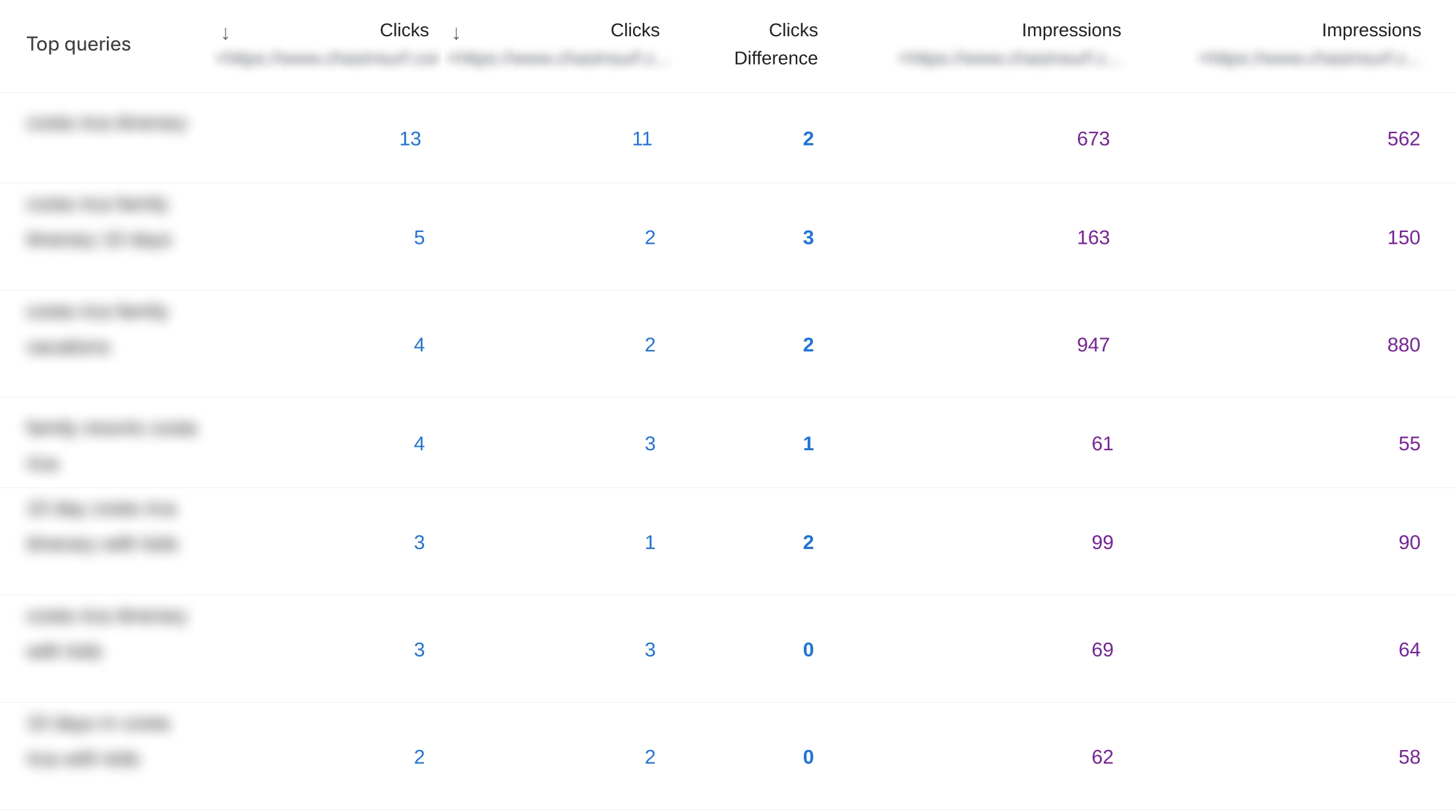
Within 3–4 weeks of deployment, with zero backlinks built, all 4 posts showed ranking movement. The pages are still settling into their new positions, but the directional signal is clear:
| Keyword Type | Monthly Volume | Before | After | Change |
|---|---|---|---|---|
| Main destination itinerary keyword | 1,000/mo | 29 | 20 | ↑9 |
| Family accommodation keyword | 200/mo | 58 | 25 | ↑33 |
| Specific family itinerary duration keyword | Low volume | 7 | #2 | ↑5 |
| Destination + kids keyword | 1,600/mo | 29 | 25 | ↑4 |
Positions tracked via Ahrefs approximately 3–4 weeks after optimization deployment. No backlinks were built during this period.
Context: these are early positions captured a few weeks after deployment. The pages are still settling. Link building hasn't started yet, every position gain here is driven purely by on-page and cluster structure changes.
All 4 posts moved up to 33 spots on on-page work alone: keyword mapping, rewritten titles, internal links, and schema. Our on-page SEO service runs that same 36-point checklist across your pages.
Explore Our On-Page SEO ServiceWhy It Worked
Three things specifically drove the movement, and they apply to any established travel blog.
Fixing cannibalization released the rankings already there
Biggest leverThe ranking potential existed before we started. The content was good. The problem was that two posts were splitting the signal Google needed to rank one of them confidently. Once we differentiated the intent of each post clearly (at the title, meta, H1, and intro level), Google stopped hedging and started committing to one page per intent. That single change drove most of the position gains.
Internal linking turned four isolated posts into a cluster
ArchitectureBefore optimization: four posts about the same destination with almost no links between them. After: a structured cluster where each supporting post passes authority to the pillar, and the pillar routes readers to the paid guide and to other destination clusters. Google follows links to understand content hierarchy. When the hierarchy is explicit and consistent, topical authority consolidates on the right page.
Content depth on the pillar gave it something to rank for
ContentA pillar post for a destination cluster should be the most comprehensive planning resource on the topic. Before our work, the post had strong personal experience content but was missing the practical sections that high-ranking travel guides include: safety tips, packing guidance, budget expectations, best time to visit, and family logistics. Adding these sections expanded the page's topical coverage and gave it more surface area to rank for long-tail planning queries.
Key Takeaways for Travel Blog SEO
Travel blogs don't have a content problem, they have a structure problem.
The content is almost always good on established travel blogs. The problem is that posts about the same destination are competing instead of working together. Fix the cluster architecture before writing a single new word.
One keyword, one intent, one post: non-negotiable.
If two posts in your cluster are targeting the same primary keyword, you're actively hurting both of them. Differentiate at the intent level, not just the title, and the rankings follow.
Internal linking is the cheapest authority signal you have.
You don't need backlinks to move rankings in a travel cluster. Strategic internal links between related posts consolidate topical authority and give Google a clear content hierarchy, for free, within your own site.
Affiliate placement is a reader experience decision, not a monetization one.
Affiliate links placed at the right moment in the content flow convert better and keep bounce rates low. Both matter for rankings. The question isn't "how many affiliate links", it's "does this link appear at the exact moment the reader needs it."
A checklist prevents rework at scale.
Running every post through the same 36-point checklist means nothing gets missed and nothing needs to be revisited. Without a checklist, optimization is reactive, you fix what's visible, not what matters. When you scale to Key West, Alaska, Italy, the checklist is what keeps quality consistent across every cluster.
Running a Travel Blog That Should Be Ranking Higher?
We'll audit your destination clusters, fix cannibalization, and build an affiliate-integrated SEO strategy that compounds, destination by destination.
Get a Free Travel SEO Audit