The Challenge: A New Shopify Store With No SEO Foundation
The brand sells alt wine, a wine-inspired non-alcoholic and THC-infused beverage line, through a Shopify store built pre-launch. The store had product pages, collection pages, and supporting static pages, but no SEO architecture. Title tags were either missing or defaulted to product names. Meta descriptions were blank across the board. Collection pages had no keyword-targeted copy, no FAQ sections, and no internal linking strategy.
Shopify presents specific SEO challenges that differ from standard CMS platforms. Collection pages and product pages can create near-duplicate content when multiple collections contain the same products. The default URL structure produces both /collections/ and /products/ paths that can compete with each other. Schema markup is not natively supported on collection pages and requires manual theme-level implementation.
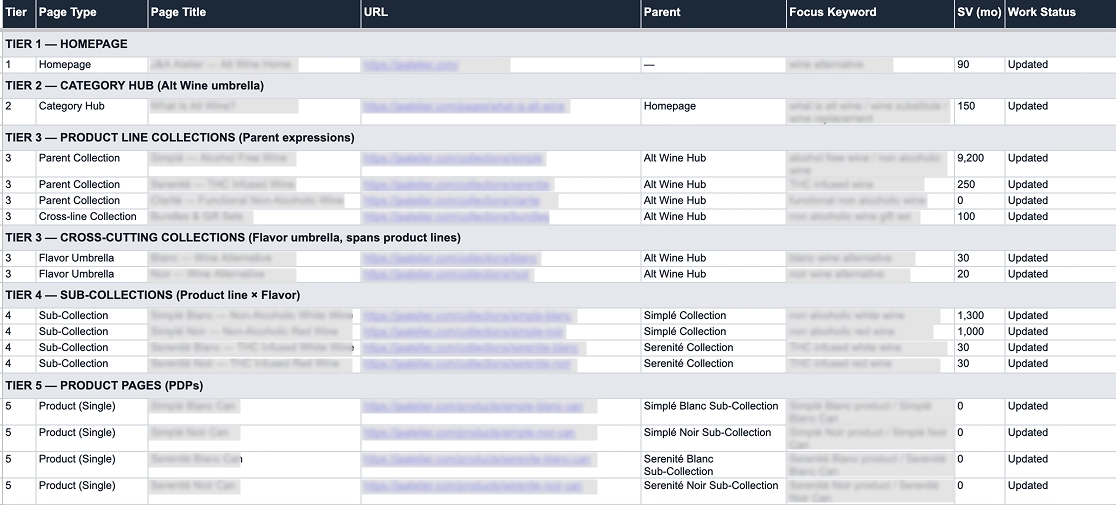
The brand had three product lines: Simplé (non-alcoholic), Serenité (THC-infused), and Clarité (functional, pre-launch), each with parent collection pages, sub-collection pages by flavor (Blanc and Noir), and individual product pages. The page architecture was there. The SEO signals were not.
The brief: build full Shopify SEO across 16 pages (title tags, meta descriptions, H1s, collection copy, FAQs, schema, internal linking, and image alt text) without rebuilding the theme or changing the URL structure.
The Strategy: Collection-First, Cannibalization-Free
In Shopify e-commerce, collection pages, not product pages, are the primary SEO lever. They aggregate products, carry category-level intent, and are the pages most likely to rank for high-volume transactional terms. The strategy prioritized collection page optimization above all else, treating product pages as supporting signals rather than primary ranking targets.
A strict one-keyword-per-URL rule was enforced before any copy was written. Each of the 16 pages was assigned a single primary keyword with clearly differentiated secondary keywords. The parent collection /collections/simple targeted "alcohol free wine" (9,000/mo). The sub-collection /collections/simple-blanc targeted "non alcoholic white wine" (8,000/mo). The sub-collection /collections/simple-noir targeted "non alcoholic red wine" (12,000/mo). No two pages competed for the same primary term.
The homepage was designated as a brand and navigational entry point, not a keyword-targeting page. A lightweight reinforcement of "alt wine" and "wine alternative" in the title tag and meta description was sufficient to signal the category to Google without competing with the /pages/what-is-alt-wine hub page.
Our Shopify SEO service builds the same collection architecture, schema, and internal linking from day one.
The Execution: Every Shopify SEO Signal, Page by Page
Title tags and meta descriptions: every page
BasicsAll 16 pages received keyword-targeted title tags (≤60 characters) and meta descriptions (≤155 characters). Title tag format: [Primary Keyword] | [Product/Collection Name] by J&A Atelier. Every meta description included the primary keyword, a secondary keyword, and a brand differentiator ("built from scratch, not dealcoholized" or "0.0% ABV, no preservatives"). Blank meta descriptions on a new domain are a fast way to let Google write your snippet, and Google almost always chooses wrong.
Collection page copy with H2, body, and FAQ
Collection SEOEach collection page received a new H2 subheading above the products, a 100-150 word body copy block, and a 4-6 question FAQ section with page-specific questions. The FAQ questions were written to target secondary keywords and long-tail variants. A critical finding during audit: the Simplé Blanc and Simplé Noir collection pages had identical FAQs, word for word. Duplicate FAQ content across sibling collection pages is a common Shopify mistake. Both were rewritten with page-specific questions and flavor-specific answers.
Schema markup via Shopify theme injection
SchemaShopify does not natively output CollectionPage or FAQPage schema. JSON-LD blocks were manually added to the theme's layout/theme.liquid for collection pages and product pages. CollectionPage schema was applied to all 6 collection pages. Product schema with offer details (price, availability, currency) was applied to all 4 product pages. FAQPage schema was applied to collection and hub pages with FAQ blocks. Organization and WebSite schema was added to the homepage for entity establishment.
Internal linking: silo architecture in Shopify
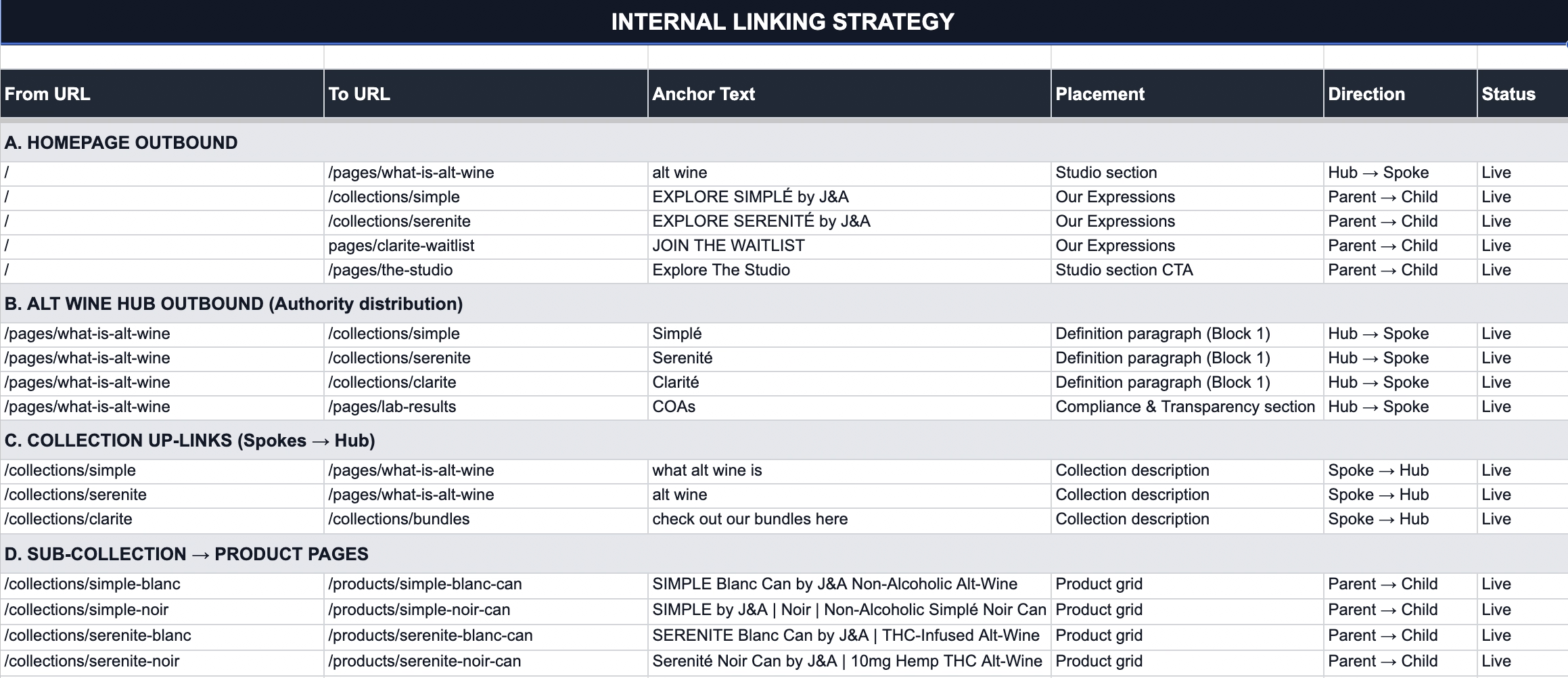
Internal linkingA three-tier internal linking structure was built: the category hub (/pages/what-is-alt-wine) linked down to all three parent collections; each parent collection linked to its sub-collections and cross-linked to the other line; sub-collections cross-linked to their sibling and to the parent. Every anchor text was keyword-rich. Generic anchors like "click here" or "shop now" were replaced with descriptive anchors like "non alcoholic white wine" and "THC infused red wine."
The Results: 16 Pages Fully Optimized, Indexed, and Tracking
All 16 pages were optimized and submitted to Google Search Console for indexing. This is an active engagement, the domain is new and ranking results will compound over months 3-6 as domain authority builds. The structural work is complete.
Jennifer, the founder, confirmed after implementation: "Everything looks strong, really appreciate the thoughtfulness and structure you're bringing to this." The pages were reviewed and approved before the engagement moved to the next milestone.
16 pages optimized with zero cannibalization and 6 schema types, all inside Shopify. Our Shopify SEO service runs the same page by page build for your store.
Explore Our Shopify SEO ServiceWhy It Worked
Shopify SEO is 80% avoiding platform-specific mistakes and 20% optimization.
Collection pages are the primary SEO asset in Shopify
Platform insightMost Shopify store owners optimize product pages first. This is backwards. Product pages rank for long-tail, specific searches. Collection pages rank for the high-volume category terms ("alcohol free wine," "non alcoholic red wine," "THC infused wine") that drive meaningful traffic. Every optimization hour on collection pages returns more traffic than the same hour on product pages.
The duplicate FAQ problem is everywhere on Shopify
Common mistakeWhen a developer builds multiple similar collection pages quickly, they often copy-paste the FAQ block from one page to another. The result is sibling pages with identical content, a clear duplicate content signal to Google. Rewriting FAQs to be page-specific is one of the highest-leverage fixes on any Shopify store with multiple collections in the same product category.
Schema has to be manually injected on Shopify
TechnicalShopify outputs basic Product schema automatically for product pages. Everything else (CollectionPage, FAQPage, Organization, WebSite) requires manual JSON-LD injection via the theme. Most Shopify stores have no collection-level or FAQ schema at all. This is a gap that is cheap to fix and has direct impact on both traditional rankings and AI Overview eligibility.
The Honest Caveats
New domain: ranking timeline is 3-6 months.
On-page optimization is complete, but a new domain needs time to build authority. Meaningful ranking movement on competitive terms (9,000-12,000/mo volume) should be expected in months 4-6, not weeks.
Shopify has platform limitations that cap what's possible.
The /pages/what-is-alt-wine hub page required a UI change to support editorial content format, Shopify's default page template doesn't natively support long-form editorial layout. Some platform constraints required workarounds rather than ideal implementations.
No backlinks built in this phase.
This milestone covered on-page SEO only. Link building is a separate milestone. The on-page foundation is the prerequisite: every backlink acquired after this point compounds on a clean, well-structured base.
Key Takeaways
Optimize collection pages before product pages on Shopify.
Collection pages rank for category-level terms that drive volume. Product pages support with long-tail. Prioritize in that order.
Audit for duplicate FAQ content across sibling collections.
If you have multiple collections in the same product category, check that the FAQ blocks are page-specific. Copy-pasted FAQs are one of the most common and damaging mistakes on Shopify stores.
Inject schema manually, don't rely on Shopify's defaults.
Shopify's native schema only covers basic Product markup. CollectionPage, FAQPage, Organization, and WebSite schema all require manual JSON-LD injection into the theme. This is a one-time fix with lasting impact.
Map cannibalization before writing a single word.
Assign one primary keyword to one URL. Build the matrix. Then write the copy. Fixing cannibalization post-implementation requires re-optimizing pages that are already live, far more expensive than getting it right from the start.
Running a Shopify Store That Should Be Ranking?
We'll audit your collection pages, identify duplicate content, and map the on-page fixes that will move the needle, with or without new content.
Get a Free SEO Audit