The Challenge: Ranking in a Category That Didn't Have a Name Yet
The brand operates in the alt wine space, a product category sitting at the intersection of non-alcoholic beverages, THC-infused drinks, and functional wellness. The products are wine-inspired, built from scratch without dealcoholization, and offered in two lines: a pure non-alcoholic expression and a hemp-derived THC-infused expression.
The SEO problem was unusual. Unlike most e-commerce launches where the keyword map is straightforward, this brand needed to do two things simultaneously: capture existing search demand for established terms like "alcohol free wine" and "non alcoholic red wine," and plant the flag on emerging category terms like "alt wine," "THC infused wine," and "hemp wine non alcoholic", where search volume was low or unreported but competitive intensity was zero.
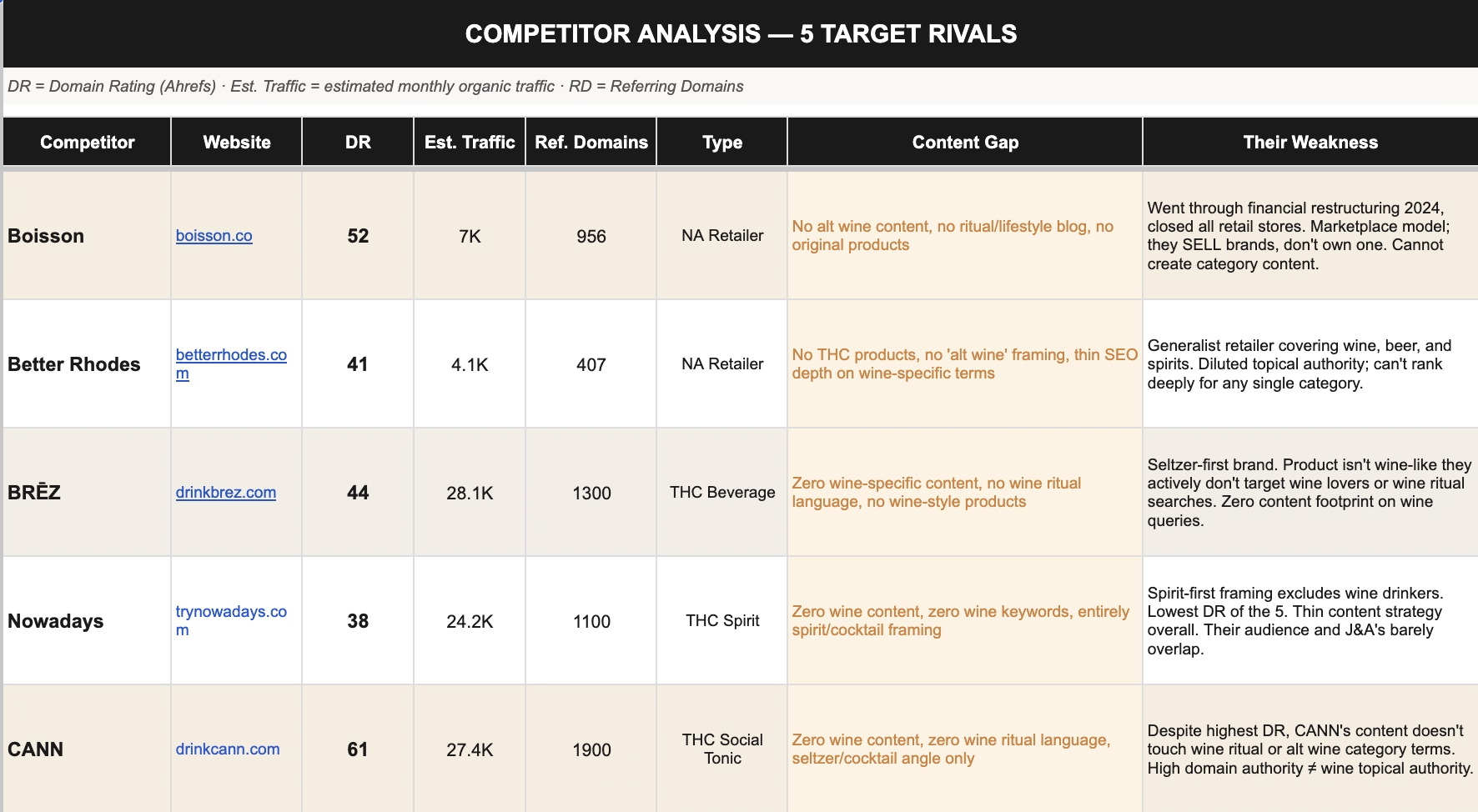
Five competitors were analyzed: Boisson, BetterRhodes, Brez, Cann, and Nowadays. The finding was striking: Brez, Cann, and Nowadays drove 85-90% of their organic traffic from branded searches. None were competing on category keywords. Boisson was the only brand with real non-branded SEO presence, ranking #5 for "alcohol free wine" and driving ~1,884 visits per month from a single collection page.
The brief: build a keyword architecture that captures immediate demand and establishes category authority, before the competition realized SEO was the lever.
The Strategy: Two-Track Keyword Architecture
The strategy was built around a two-track model. Track one targeted established transactional demand: "alcohol free wine" (9,000/mo), "non alcoholic red wine" (12,000/mo), "non alcoholic white wine" (8,000/mo), where Boisson and BetterRhodes had footholds but were beatable with stronger on-page signals and cleaner page-to-keyword mapping.
Track two targeted the unclaimed emerging category. No competitor was targeting "THC infused wine," "hemp wine non alcoholic," "THC infused white wine," or "THC infused red wine" from a wine-ritual positioning. The brand's THC line could own this entire category with a small number of well-structured collection pages and two to three supporting blog posts.
A critical discovery shaped the keyword map: the brand's core differentiator (wine built from scratch, not dealcoholized) was not reflected in any competitor's content. This became the central SEO angle across both tracks, embedded into collection descriptions, FAQ schema, and the category hub page.
Five topic clusters were defined, each with a dedicated pillar page and supporting keywords: Alt Wine category hub, Non-Alcoholic Wine (Simplé), THC Wine (Serenité), Functional Wine (Clarité, pre-launch), and Gifting & Occasions (Bundles). Every keyword was assigned to exactly one URL. Cannibalization was mapped and eliminated before a single page was touched.
Every keyword here was assigned to exactly one URL before a word was written, so no two pages compete. Our on-page SEO service maps yours the same way.
The Execution: 60 Keywords, 16 Pages, Zero Overlap
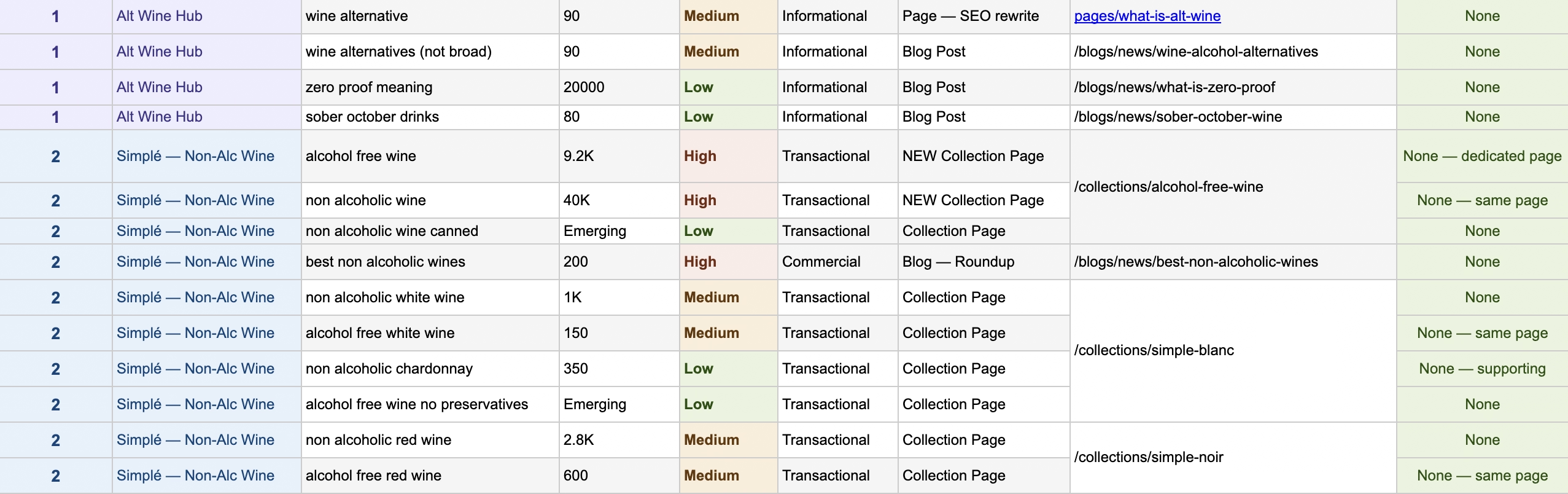
The keyword map was built from Ahrefs CSV exports across all five competitors, extracting every non-branded top keyword, volume, and ranking position. 627 unique non-branded keywords were analyzed. The final map contained 60 keywords assigned across 16 pages, with a cannibalization matrix confirming zero primary keyword overlap between any two URLs.
Intent separation by product line
ArchitectureThe Simplé (non-alcoholic) and Serenité (THC) lines required clean keyword separation. The THC modifier created natural intent separation: "alcohol free white wine" for Simplé Blanc and "THC infused white wine" for Serenité Blanc target different buyers with different intents. No page competed with another. The parent Simplé collection targeted "alcohol free wine" (9,000/mo), while Serenité parent targeted "THC infused wine", emerging volume, zero competition.
Category hub as topical authority anchor
Hub strategyThe /pages/what-is-alt-wine page was designated as the category hub: the single page that defines the alt wine category, links to all expressions, and targets informational terms like "what is alt wine," "wine alternative," and "sober curious wine." No competitor had a single page positioning themselves as the definitional authority on this category. The hub was built with editorial structure, FAQPage schema, and internal links to every collection page.
Pre-launch SEO for the Clarité line
Pre-launchThe Clarité line, a functional wine with Lion's Mane, was on a waitlist with no live products. A full keyword cluster was built and mapped to /collections/clarite: "functional non alcoholic wine," "lion's mane drink non alcoholic," "nootropic wine alternative." Brez ranked #8 for "lion's mane drink" as a seltzer brand, J&A could outrank with wine-specific positioning. The page was optimized before launch so it would have age and indexing history when the product went live.
The Results: Category Architecture Built, Implementation Underway
This is an active engagement. The keyword architecture and topic cluster map have been delivered and approved. On-page implementation is in progress. The results below reflect the strategic foundation, measurable ranking outcomes will be documented as the domain ages and pages index.
The THC wine keyword cluster remains entirely unclaimed by any competitor. "Alcohol free wine" has been assigned as the primary keyword for the main Simplé collection, Boisson at position 5 is the benchmark to beat. BetterRhodes at position 11 for "non alcoholic red wine" using a collection page confirms the page type strategy is correct.
60+ keywords across 16 pages with zero cannibalization, all inside Shopify. Our Shopify SEO service builds the same architecture for your store.
Explore Our Shopify SEO ServiceWhy It Worked
Three decisions drove the keyword architecture, each applicable to any brand launching in an emerging niche.
Data source determined the entire strategy
Competitor intelSimilarWeb showed inflated competitor traffic numbers. Ahrefs CSV exports told the real story: 85-90% of competitor traffic was branded. This single insight changed the entire strategic frame: the category keyword space wasn't competitive, it was empty. Without the right data source, the strategy would have been far more conservative.
One keyword per page, enforced from the start
ArchitectureEvery keyword was assigned to exactly one URL before any copy was written. The cannibalization matrix was built first. This prevented the most common Shopify SEO mistake: collection pages, product pages, and blog posts all competing for the same term. When the pages went live, Google had a clean signal to work with from day one.
Emerging keywords on a new domain are the fastest wins
New domainA brand new domain cannot compete immediately for 9,000/mo keywords against established brands. But it can rank for emerging terms where the competitive bar is zero. Targeting "THC infused wine" on a new domain costs the same implementation effort as targeting "alcohol free wine", but the ranking probability in year one is dramatically higher. Both tracks run in parallel: emerging terms for early wins, established terms for long-term compound growth.
The Honest Caveats
Rankings are not yet confirmed.
This case study documents the strategy and architecture phase. On-page implementation is live and indexing is underway. Ranking outcomes will be documented in a follow-up update.
THC keyword volumes are emerging, not established.
Many Serenité keywords show 0 reported volume in Ahrefs. Zero reported volume is not zero demand, it means the category is new. This is a pre-emptive category play, not a volume-capture play. The bet is that these terms grow as the THC beverage market grows.
New domain means slower compounding.
A new domain with no backlink history will take longer to rank for competitive terms than an established domain. The architecture is right, but patience is required on the high-volume keywords. Month 4-6 is when meaningful movement is expected on established terms.
Key Takeaways
Competitor traffic data determines strategy, not competitor rankings.
Before building a keyword map, pull competitor traffic data from Ahrefs, not SimilarWeb. Understanding whether competitor traffic is branded or organic fundamentally changes what you're competing against.
New brands should target emerging niches, not established ones, at first.
A new domain cannot compete on day one for 9,000/mo keywords. But it can be first in an emerging category. Run two parallel tracks: claim the emerging terms now, build toward competitive terms over 6-12 months.
Build the cannibalization matrix before writing a single word of copy.
Assign every keyword to exactly one URL before implementation starts. Fixing cannibalization after the fact is harder, slower, and more expensive than getting it right from day one.
Pre-launch SEO on unreleased products is one of the highest-leverage activities in e-commerce.
Optimizing a waitlist page for target keywords costs almost nothing. By the time the product launches, the page has indexing history, internal links, and a head start over any competitor who starts SEO at launch.
Launching in an Emerging Niche?
We'll map the keyword architecture, identify the gaps competitors haven't claimed, and build the foundation before they show up.
Get a Free SEO Audit